

Part 1: Foundational Ad Setup & Optimization
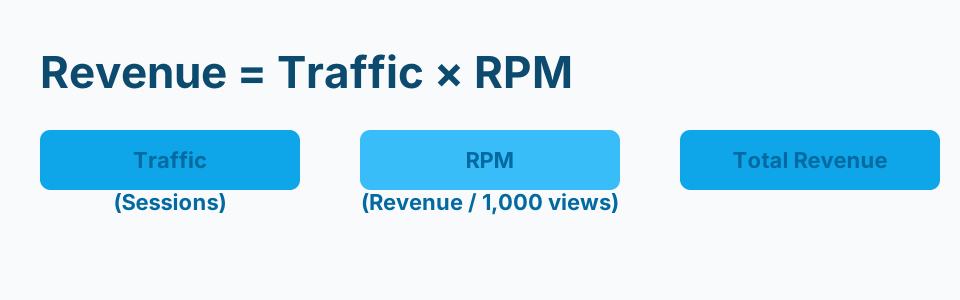
Before touching your content, the biggest wins often come from auditing and optimizing your core ad settings. These are the foundational levers that control your earning potential.
1. Conduct a Full Ad Settings Audit
Your ad network's dashboard is your command center. Too many publishers use the default settings and never look back, leaving a significant amount of money on the table. It’s time for a check-up.
- Check Your Ad Density: Ad density is simply the number of ads shown on a page. While it’s tempting to slide this to "maximum," it can destroy your user experience and lead to diminishing returns. Start at your ad network's recommended "optimal" setting. This setting is usually data-backed to provide the best balance of revenue and user experience.
- Enable High-Earning Ad Units: Go through your ad settings and ensure you’ve opted into the highest-earning units. The sticky footer (adheres to the bottom of the screen) and sticky sidebar (adheres to the side on desktop) are revenue powerhouses. Also, consider enabling interstitial or vignette ads, which appear between page loads. They have a high CPM but should be used thoughtfully to avoid annoying users.
- Opt-In to a "Recipe Card" or "How-To" Ad Unit: If you run a food, craft, or DIY blog, this is non-negotiable. Specialized ad units placed within your recipe or instruction cards are highly viewable and contextually relevant, commanding premium rates from advertisers.
2. Master Ad Viewability: The Metric That Matters Most
This is the most important metric you’ve probably never checked. It's the secret sauce to higher RPMs.
- What is Ad Viewability? In simple terms, an ad impression only counts—and pays top dollar—if a user actually sees it on their screen for a minimum amount of time. If an ad loads at the bottom of a post but the reader never scrolls down, you get paid very little, if anything. The industry goal is a viewability score of 70% or higher.
- How to Improve It:
* Use Sticky Ads: Sticky footer and sidebar ads are almost 100% viewable, which is why they are so valuable.
* Improve Site Speed: A fast-loading website displays ads quicker, giving them a better chance of being seen. We’ll cover this more later.
* Break Up Text: Long, intimidating walls of text cause users to skim or leave. By inserting images, blockquotes, or bullet points, you create natural "pauses" where an in-content ad can load and be seen.
3. Embrace High-CPM Video Ads
Video is king in the advertising world, and advertisers will pay a premium to get in front of engaged eyeballs. You don't even need to produce your own videos to benefit.
- Why Video Pays More: Video ads combine visual and audio elements, leading to higher engagement and brand recall for advertisers. This allows them to bid significantly more for these spots compared to standard display ads.
- The "Universal Player": Most premium ad networks (like IMC, Mediavine, and Raptive) offer a "universal video player." This is a sticky video player that plays relevant, high-quality ad content related to your article. By enabling this feature, you can instantly add high-CPM video revenue to your site with zero effort.
- Create Your Own Content: If you do have a YouTube channel, embedding your own videos is a fantastic ad revenue optimization tip. It keeps users on your page longer and allows your ad network to run pre-roll and mid-roll ads on your video, creating an entirely new revenue stream.
4. Optimize for High-Value Geographic Traffic
Not all traffic is created equal. An advertiser selling in the US market will pay far more to reach a user from the US than one from a country where they don't sell products.
- Understand Your Geo-Data: Log into Google Analytics and navigate to
Reports > User > User attributes > Demographics details. Here, you can see which countries your visitors are coming from. Traffic from tier-1 English-speaking countries (United States, United Kingdom, Canada, Australia) typically has the highest RPM. - The "So What?": You can't change where your users live, but you can use this data to inform your content strategy. Let's say you notice a popular post is getting significant, unexpected traffic from the UK. Revisit that article and update it with UK-specific terminology, examples, or product links. This small change can increase engagement and time on page for those high-value users, leading to higher ad earnings.
---
Part 2: On-Page & Content Enhancement
How you structure your content has a direct impact on your ad revenue. These on-page tweaks are designed to increase ad impressions and viewability organically.
5. Strategically Lengthen Your Top 10 Performing Posts
Your most popular posts are proven winners. It's time to double down on them.
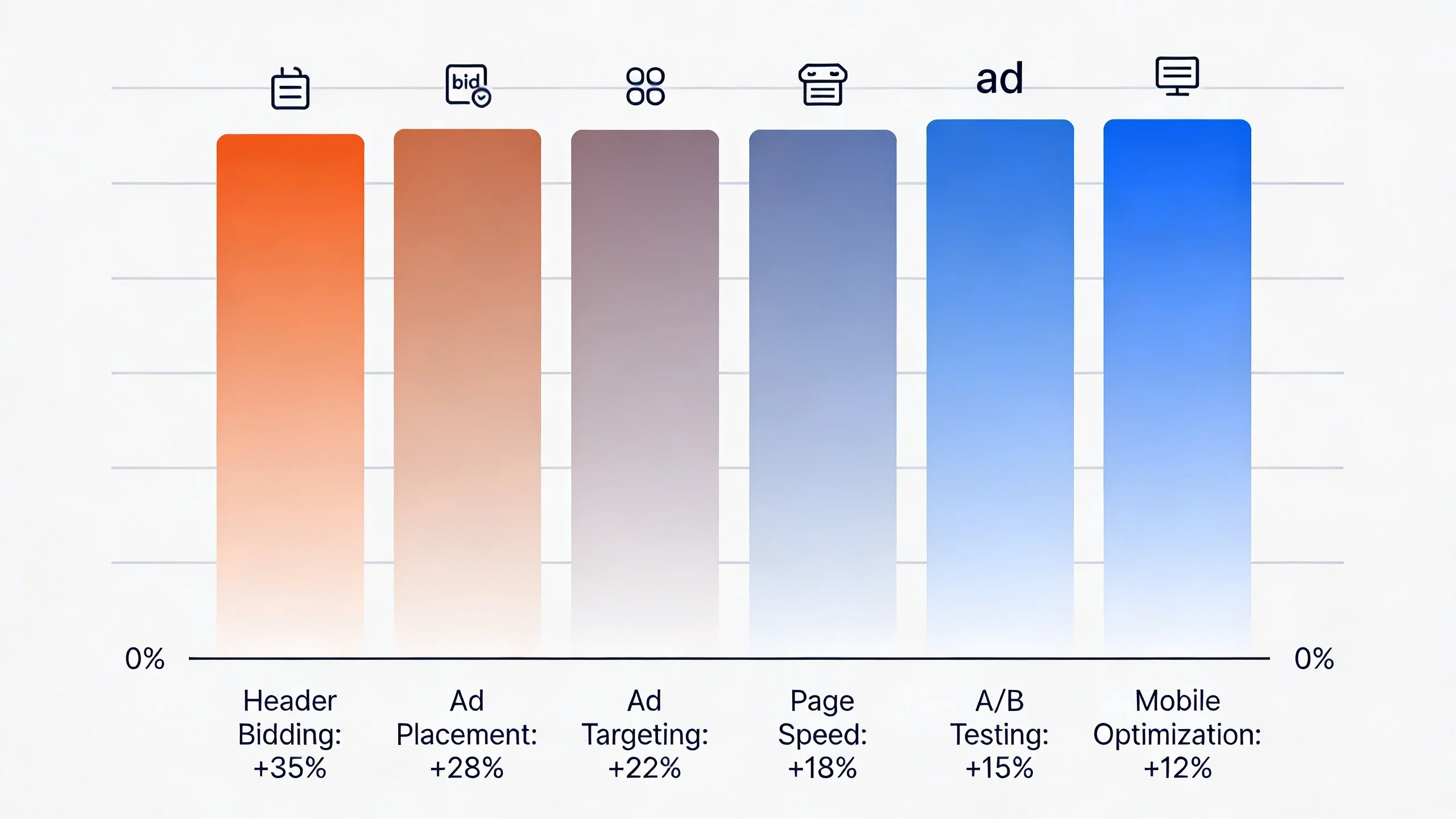
- More Content = More Ad Slots: The logic is simple. A comprehensive, 2,500-word article has more natural opportunities for in-content ad placements than a short 700-word post. More ad slots, when filled correctly, lead to more revenue.
- How to Lengthen Content Meaningfully: Don't just add fluff. Identify your top 10 traffic-driving articles and enhance them with genuine value. Add a detailed FAQ section answering common user questions, include "expert tips" or "pro-tip" callouts, expand on your points with case studies, or add a step-by-step "how-to" section. This not only creates more ad space but also improves your SEO.
6. Improve Your Internal Linking Architecture
Your goal is to turn a single pageview into a multi-page session.
- The Goal: Increase Pages Per Session: Every time a user clicks an internal link to another page on your site, it’s a brand-new opportunity to serve a full set of ad impressions. Increasing your average pages per session from 1.2 to 1.5 can have a massive impact on your total ad earnings.
- Actionable Steps: Don't leave your reader at a dead end. Add "Related Reading" blocks at the end of your posts. Link key terms contextually within the body of your text to other relevant articles. Ensure your main navigation and sidebar are clear and guide users to your most valuable content.
7. Prioritize Site Speed and Core Web Vitals (CWV)
In 2025, site speed isn't just an SEO metric; it's a revenue metric.
- Speed is Money: A slow website kills ad revenue in two ways. First, if ads load too slowly, users may scroll past them before they even appear, destroying viewability. Second, a slow user experience leads to higher bounce rates, meaning fewer pages per session.
- Focus on INP and CLS: While all Core Web Vitals are important, pay special attention to Interaction to Next Paint (INP) and Cumulative Layout Shift (CLS). A low CLS score is critical for a good ad experience, as it prevents ads from "jumping" around the page as they load, which frustrates users and can lead to accidental clicks. A good INP ensures your site is responsive, keeping users engaged. Use Google's PageSpeed Insights to diagnose issues.
8. Perfect Your Mobile User Experience
Your website isn't what you see on your desktop monitor. It's what your readers see on their phones.
- Where Your Users (and Ads) Live: Open your analytics. It's highly likely that 70-80% of your traffic is on a mobile device. Optimizing for this experience is paramount.
- Mobile-Specific Optimizations:
* Use a high-quality, responsive theme that looks great on all screen sizes.
* Ensure your font size is large and legible, preventing the need to pinch and zoom.
* Check that buttons, links, and navigation menus are easy to tap with a thumb.
A seamless mobile experience leads to longer session durations and more ad views.
9. Break Up Text with Non-Ad Elements
Ads perform best when they feel like a natural part of the content flow, not an interruption.
- Creating Natural Ad Breaks: Just like in a magazine, ads need whitespace to be effective. You can create this digitally by strategically using non-ad elements.
- What to Add: Use high-quality images with descriptive captions. Pull out important quotes and format them as blockquotes. Convert dense paragraphs into scannable bulleted or numbered lists. These elements not only improve readability but also create perfect, viewable pockets for your in-content ads to load.
10. Implement a Table of Contents (TOC) for Long Articles
For your newly lengthened, high-performing posts, a Table of Contents is an engagement powerhouse.
- Engagement and Time on Page: A TOC allows users to see the structure of your article at a glance and jump to the section most relevant to them. This user control increases engagement and keeps them on the page longer, boosting the chances they'll see more ads and trigger your sticky video player.
- SEO Benefits: As an added bonus, the jump links generated by a TOC plugin can be featured directly in Google search results, which can improve your click-through rate.
---
Part 3: Advanced & Strategic Approaches
You've optimized your settings and your content. Now it's time to think like a high-level publisher and implement advanced monetization strategies.
11. Adjust Your Content Calendar for High-CPM Seasons & Topics
Ad spending is not consistent throughout the year. Aligning your content strategy with advertiser budgets is a pro-level move.
- Understanding CPM Seasonality: Advertiser spending skyrockets in Quarter 4 (October-December) due to Black Friday, Cyber Monday, and the holiday shopping season. This means your RPMs will naturally be highest during these months. Conversely, budgets are tight in Q1 (January-March), leading to the "January slump" in ad rates.
- Strategic Action: Plan your content calendar accordingly. Publish and update your most commercially valuable content—gift guides, product reviews, "best of" lists—in late Q3 and early Q4 to capitalize on the spending frenzy.
12. Use A/B Testing for Ad Placements (If Possible)
Stop guessing and start testing. Data-driven decisions are always the most profitable.
- Data-Driven Decisions: Some ad networks or third-party tools allow you to A/B test different ad layouts. This lets you scientifically determine what works best for your specific audience.
- What to Test: You can run experiments to test nearly anything. Does a higher ad density actually increase overall revenue, or does it hurt user metrics? Does a sticky sidebar on desktop outperform a layout without one? Testing these variables can lead to significant, data-backed RPM gains.
13. Clean Up Your "Consent Management Platform" (CMP)
That annoying cookie banner that pops up on every site is more important than you think.
- The Annoying Cookie Banner: A confusing, slow-loading, or overly aggressive cookie pop-up can cause users to bounce before your content and ads even have a chance to load. This is lost revenue.
- Best Practices: Work with your ad network to ensure your CMP is clear, loads quickly, and is easy for the user to navigate. A higher consent rate is crucial because it allows advertisers to serve personalized (and much higher-paying) ads to your visitors.
14. Explore Direct Ad Sales
For established sites with a well-defined niche, selling ad space directly can be incredibly lucrative.
- Cutting Out the Middleman: When you sell an ad spot directly to a brand, you keep 100% of the revenue, bypassing the ad network's commission. This works best if your audience is a perfect match for a specific company's product.
- How to Start: Create a simple "Advertise With Us" page on your website. Include your key traffic statistics, audience demographics, and a clear way to get in touch. You might be surprised by the interest you receive.
15. Supplement with High-Value Affiliate Marketing
This is a bonus strategy that works in tandem with your display ads to maximize revenue from every pixel of your site.
- It's Not Ad Revenue, But It's Revenue: Instead of letting your ad network place a low-paying programmatic ad in a certain spot, consider if a high-converting affiliate link or product display would perform better.
- The Perfect Placement: This is ideal for in-content placements where you can make a highly relevant product recommendation. For example, in an article about the best cameras for travel, a visually appealing display unit from an affiliate partner like Amazon or B&H Photo will likely earn more than a random display ad.
Conclusion
Increasing your ad revenue doesn't always require the monumental effort of doubling your traffic. The real key to profitability lies in optimization—making more from the audience you already have. By focusing on the RPM side of the revenue equation, you can take back control of your income growth.
Don't get overwhelmed. Pick two or three of these strategies to implement this month. Focus on viewability, lengthen your top five posts, or enable that universal video player. Track your RPM before and after the changes. Small, consistent optimizations are what separate hobby bloggers from professional publishers.
What's the first change you're going to make? Let us know in the comments