

What Are Direct Deals? The Art of the Handshake
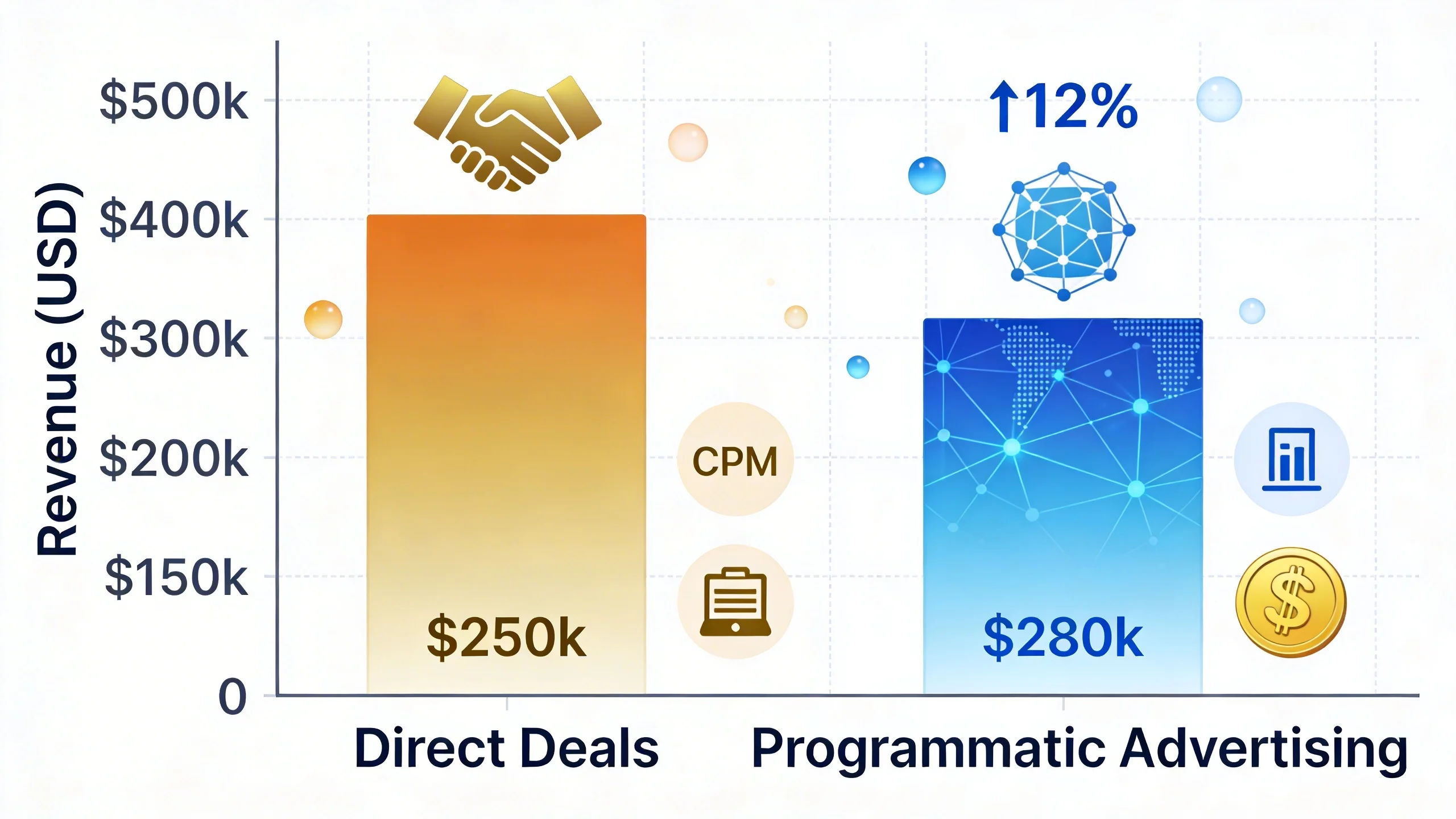
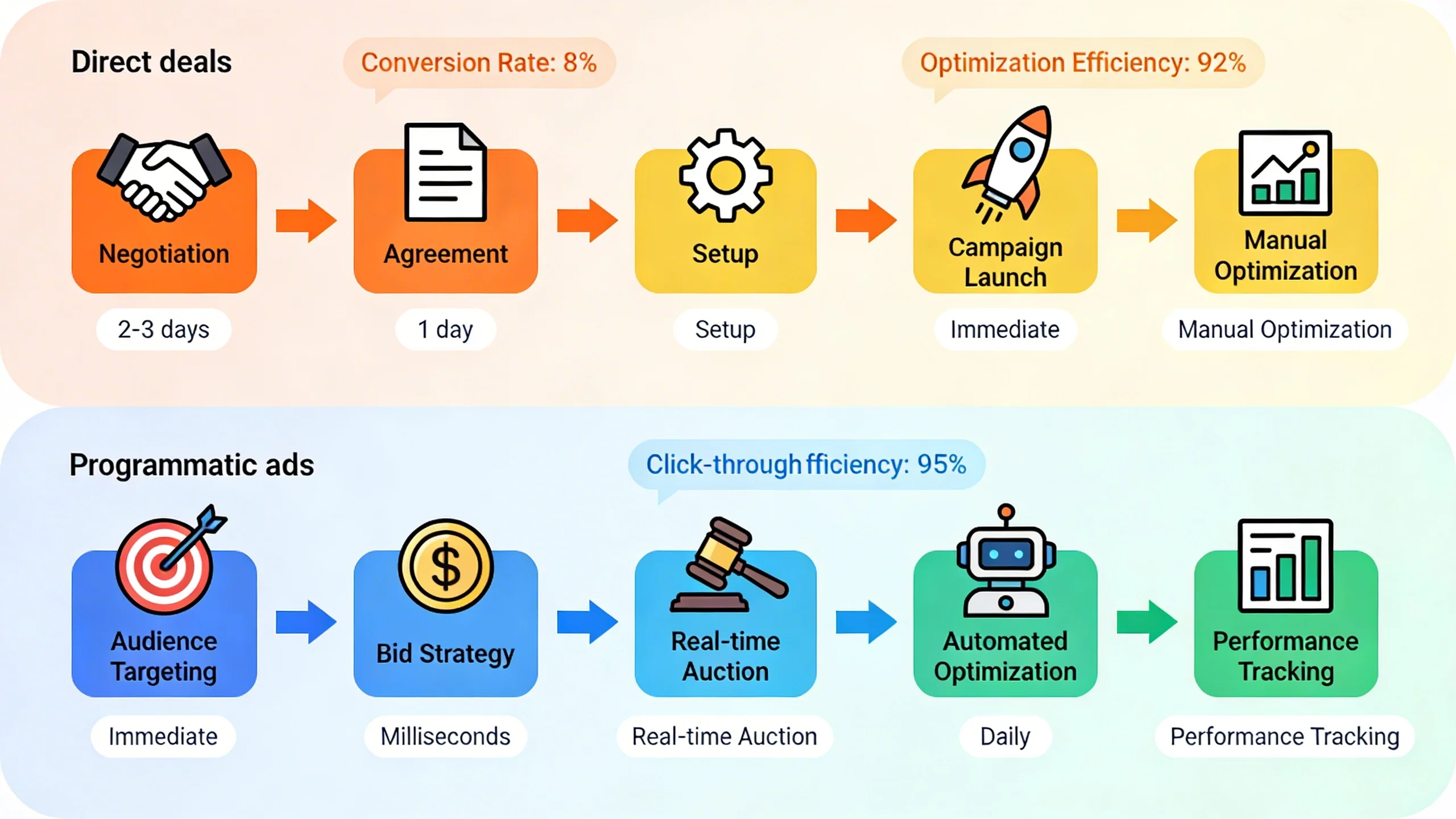
A direct deal is the traditional model of ad sales. It’s a human-to-human process where a publisher's sales team negotiates directly with an advertiser or their agency to sell a specific block of ad inventory for a fixed price (CPM), a set time period, and a guaranteed number of impressions. This process culminates in a signed insertion order (IO), the foundational contract for the campaign.
- Pros:
* High CPMs: Direct-sold premium inventory commands the highest prices in the market.
* Guaranteed Revenue: The fixed price and volume provide predictable revenue streams.
* Strong Advertiser Relationships: These deals build strategic partnerships that can lead to larger, long-term commitments.
* Full Creative Control: Publishers can vet every creative, ensuring a high-quality user experience and perfect brand alignment.
- Cons:
* High Operational Overhead: Maintaining a skilled sales team, including salaries, commissions, CRM software, and travel expenses, is a significant cost center.
* Not Scalable: The manual nature of negotiation and campaign management limits the number of deals a team can handle.
* Risk of Unsold Inventory: Any inventory not sold directly remains a sunk cost unless backfilled by another source, leading to low overall fill rates.
What is Programmatic Advertising? The Science of the Auction
Programmatic advertising is the automated, real-time buying and selling of digital ad inventory. Instead of human negotiations, it uses complex algorithms and platforms—like Supply-Side Platforms (SSPs) for publishers and Demand-Side Platforms (DSPs) for advertisers—to auction off impressions to the highest bidder in milliseconds.
The Programmatic Spectrum
Not all programmatic is created equal. It exists on a spectrum from open to exclusive:
- Open Auction (Real-Time Bidding - RTB): This is the "stock market" of advertising. Impressions are available to all buyers in a massive, real-time auction. It offers the greatest scale and ensures all remnant inventory gets sold, but typically at the lowest CPMs.
- Private Marketplace (PMP): An invite-only auction. A publisher can package premium inventory or audience segments and offer them to a select group of buyers at a pre-negotiated minimum price (a floor price). This provides more control and higher CPMs than the open auction.
- Programmatic Guaranteed (PG): This is the programmatic evolution of a direct deal. A publisher and a single buyer agree on a fixed price and volume for guaranteed inventory, but the transaction is automated through programmatic technology, eliminating the need for manual IOs and trafficking.
- Pros:
* Massive Scale & Efficiency: Provides access to a global pool of advertisers and monetizes 100% of available inventory with minimal human effort.
* High Fill Rate: The core strength of programmatic is its ability to ensure almost no impression goes unsold.
* Data-Driven Targeting: Leverages rich data to sell impressions based on audience attributes, not just context, increasing their value.
- Cons:
* Lower Average CPMs: Open auction CPMs are significantly lower than direct-sold rates.
* The "Ad Tech Tax": A portion of the advertiser's spend is taken by intermediaries (SSPs, DSPs, ad exchanges), reducing the publisher's take-home revenue.
* Brand Safety Risks: Without careful management and the right partners, there's a risk of low-quality or inappropriate ads appearing on your site.
The Core Analysis: A Head-to-Head Profitability Breakdown
To find the truth, we have to look at both sides of the ledger: the revenue generated and the costs incurred.
The Revenue Equation: Beyond the CPM
A high CPM is meaningless if the inventory goes unsold. True revenue potential is a function of both price and volume.
Metric 1: CPM / eCPM (Cost Per Mille)
Direct deals almost always command higher base CPMs. For premium, above-the-fold placements sold to a perfectly aligned brand, advertisers are willing to pay a significant premium for that guarantee. According to industry analysis, premium direct-sold CPMs can be 5x to 10x higher than eCPMs from the open auction.
Here’s a look at typical CPM ranges across channels:
| Ad Channel | Typical CPM Range |
|---|---|
| Direct Deals | $25 - $50+ |
| Programmatic Guaranteed | $20 - $40 |
| Private Marketplace (PMP) | $8 - $20 |
| Open Auction (RTB) | $1 - $5 |
At first glance, direct deals are the clear winner. But this is only half the story.
Metric 2: Fill Rate
This is where the tables turn. A direct sales team, no matter how effective, can realistically only sell a fraction of a publisher's total inventory—often between 30% and 60%. Programmatic, on the other hand, is designed to achieve a near-100% fill rate by sending any unsold impression to the open auction.
Let's use the fundamental ad revenue formula to see how this plays out:
Total Revenue = (Impressions x Fill Rate x eCPM) / 1000
- Scenario A (Direct-Heavy): 10M impressions available. Direct team sells 50% (5M imps) at a $30 CPM. The other 50% goes unsold.
* Revenue = (5,000,000 x 50% x $30) / 1000 = $75,000
- Scenario B (Programmatic Backfill): Same as above, but the 50% unsold inventory is filled by the open auction at a low $2 eCPM.
* Direct Revenue = $75,000
* Programmatic Revenue = (5,000,000 x 100% x $2) / 1000 = $10,000
* Total Revenue = $85,000
Programmatic backfill is essential. Without it, publishers are simply letting potential revenue evaporate.
The Cost Equation: Uncovering the Hidden Expenses
Gross revenue is a vanity metric. Net profit is what matters. Both models have significant, but very different, cost structures.
The Cost of Direct Deals: The Human Element
The biggest hidden cost of direct deals is operational overhead. This isn't a line item on a report; it's your payroll. You must factor in:
- Salaries and commissions for your ad sales team.
- Software costs (CRM, proposal tools).
- Travel, entertainment, and marketing expenses.
- The time cost of negotiation, trafficking, and campaign management.
As a conservative estimate, a sales team of 5 people can cost a publisher over $500,000 annually in salaries and commissions before a single ad is sold. This fixed cost must be subtracted from your gross direct-sold revenue to find the true profit.
The Cost of Programmatic: The "Ad Tech Tax"
Programmatic’s costs are variable and built into the transaction. The "ad tech tax" refers to the fees taken by every platform in the supply chain. An advertiser might bid $10, but after the DSP, ad exchange, and SSP take their cuts, the publisher might only receive $6 to $8.50. This revenue share can range from 15% to 40%.
While this sounds high, it replaces the fixed cost of a sales team. The key is working with transparent ad tech partners who can clearly show where every dollar is going and justify the value they add through yield optimization technologies like header bidding.
The Profitability Verdict: A Summary Table
Let's consolidate these findings into a clear, actionable table.
| Feature | Direct Deals | Programmatic Ads |
|---|---|---|
| Gross CPM | Very High | Variable (Low to High) |
| Fill Rate | Low to Medium | Very High |
| Revenue Predictability | High (for sold inventory) | Lower (auction-based) |
| Operational Cost | High (Salaries, T&E) | Low (Rev-share, tech fees) |
| Scalability | Low | Very High |
| Control & Brand Safety | Maximum | Requires active management |
| Net Profit Margin | High per deal, low overall | Lower per impression, high overall |
---
Want to see how your ad stack compares? Download our free Publisher's Ad Tech Checklist.
---
Strategic Factors Beyond the Spreadsheet
Profitability isn't just about dollars and cents today; it's about building a sustainable business for tomorrow.
Control, Relationships, and Brand Experience
Direct deals offer unparalleled control. They allow you to forge deep, strategic partnerships with key advertisers, offering them custom ad placements and bespoke sponsorship packages that aren't possible programmatically. For premium publishers whose brand is their most valuable asset, maintaining this level of control over the ad experience is non-negotiable.
Data, Insights, and Audience Understanding
Programmatic channels provide a wealth of audience data. By analyzing which audience segments command the highest CPMs in auctions, you can gain powerful insights. This data can inform not only your ad monetization strategy (e.g., creating new PMPs for high-value segments) but also your content strategy, helping you create more of what your most valuable audiences want to see.
Market Dynamics and Future-Proofing
The digital advertising landscape is in constant flux. The impending deprecation of third-party cookies is a seismic shift that elevates the value of first-party data. This makes direct relationships with advertisers more critical than ever. It also makes channels like Private Marketplaces (PMPs) and Programmatic Guaranteed more valuable, as they allow publishers to leverage their first-party audience data in a privacy-compliant way for a select group of buyers.
The Winning Strategy: The Unified & Hybrid Model
By now, it should be clear. The most profitable publishers don't choose one channel. They implement a sophisticated, unified strategy that leverages the strengths of both, creating a competitive auction where every channel competes to win the impression.
Stop Thinking "Vs." and Start Thinking "And"
The goal is to create a prioritized, multi-tiered monetization stack that ensures your most valuable inventory is offered to the highest-paying channel first, with a seamless backfill process to capture revenue for every remaining impression.
How to Structure Your Hybrid Strategy
Think of your ad inventory like a luxury hotel. Not all rooms are priced the same.
- Tier 1 (The Penthouse): Reserve your most premium, impactful, above-the-fold inventory for the highest bidders: your direct-sold campaigns and Programmatic Guaranteed deals. These are your most valuable assets and should be sold for a premium.
- Tier 2 (The Club Level): Use Private Marketplaces (PMPs) to package valuable inventory and first-party audience segments for a select group of approved buyers. This creates exclusivity and competition, driving up CPMs above open auction rates.
- Tier 3 (The Foundation): Use the open auction, powered by a smart header bidding setup, as your foundation. With strong brand safety filters in place, this tier acts as a global backstop, monetizing all remaining inventory and ensuring you achieve a near-100% fill rate.
The challenge, of course, is that managing this multi-tiered strategy is incredibly complex. Juggling direct-sold IOs, PMP deal IDs, and a unified auction with multiple demand partners requires powerful, intelligent technology to avoid revenue-killing errors and operational headaches. This is where a true monetization partner comes in.
From Analysis to Action
We've moved past the simple "Direct Deals vs. Programmatic Ads" debate. The analysis is clear: direct deals offer high CPMs and strategic control at a high operational cost, while programmatic provides unmatched scale and efficiency but requires careful management to maximize yield.
The real question is no longer which to choose, but rather, "How do you build a unified auction where every impression is dynamically allocated to the highest bidder, regardless of the channel?"
The publishers who will win in the years to come are the ones who master this balance. They are the ones who stop thinking in silos and start building a holistic system that turns channel conflict into a symphony of maximized yield.
---
Ready to Unify Your Ad Revenue Strategy?
Stop managing separate silos. Our platform provides a single dashboard to optimize your direct deals, PMPs, and programmatic demand in a unified auction. See how much more you could be earning.