
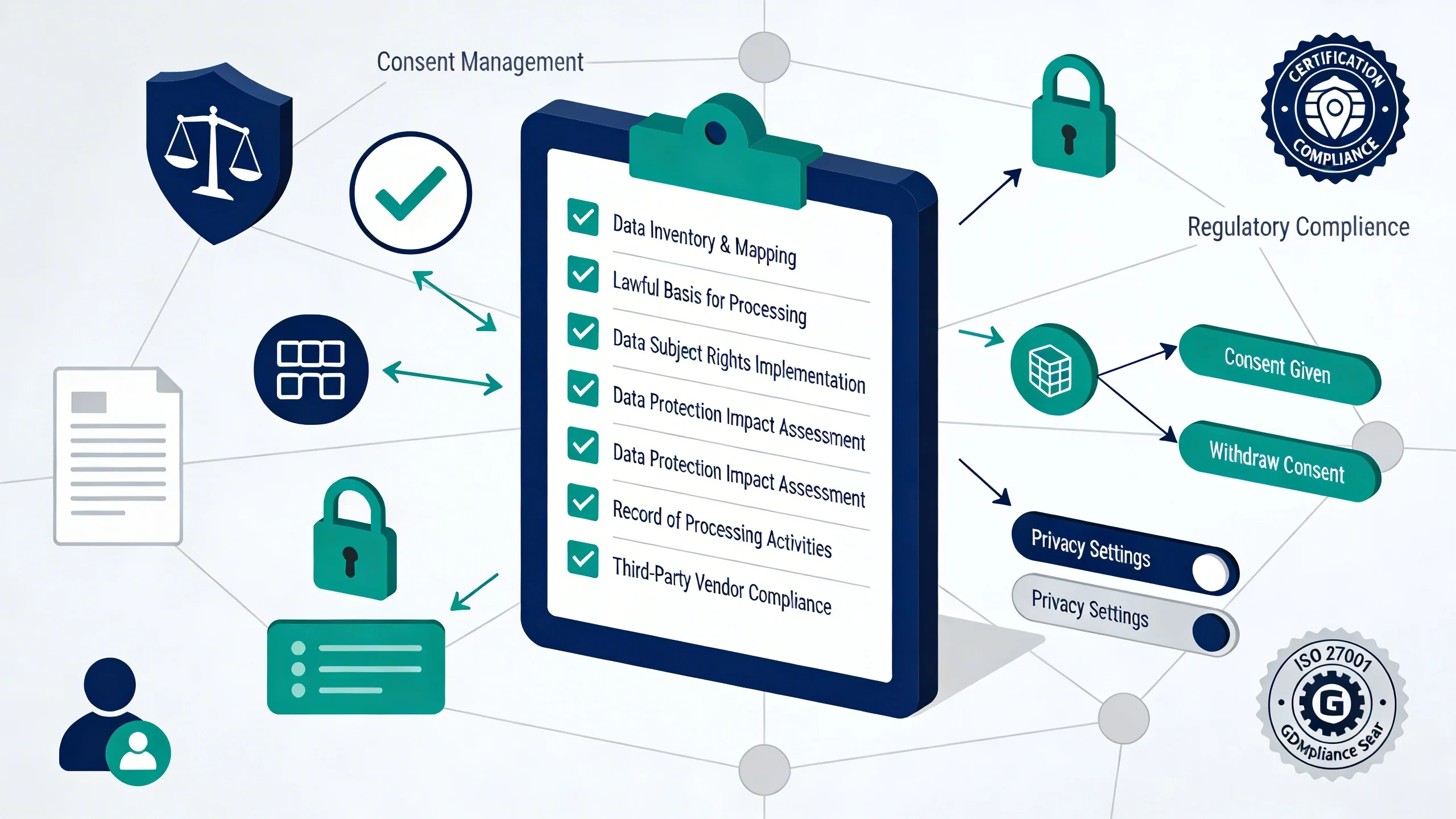
The 2025 Privacy Landscape: Why You Can't Afford to Ignore GDPR
If you thought GDPR was old news, think again. In 2025, its principles are more central to a publisher's success than ever before. The convergence of technology, regulation, and user expectations has created a perfect storm where compliance is no longer optional—it's a core business strategy.
The Post-Cookie Era Demands It
The final curtain is falling on third-party cookies. This seismic shift makes your ability to collect and use first-party data (information you collect directly from your audience) the most critical factor for targeted advertising and personalization. How do you collect that data legally? Through the clear, explicit consent mechanisms mandated by GDPR. A compliant consent framework is no longer a legal checkbox; it's the engine of your future revenue model.
Increased Enforcement & "Consent Fatigue"
Data Protection Authorities (DPAs) across the EU are actively cracking down on non-compliant consent banners. They're targeting "dark patterns"—deceptive designs that trick users into giving consent—and banners that make it harder to reject cookies than to accept them. Simultaneously, your readers are savvier than ever. They suffer from "consent fatigue" and are quick to distrust sites with confusing or coercive privacy notices.
Trust as a Differentiator
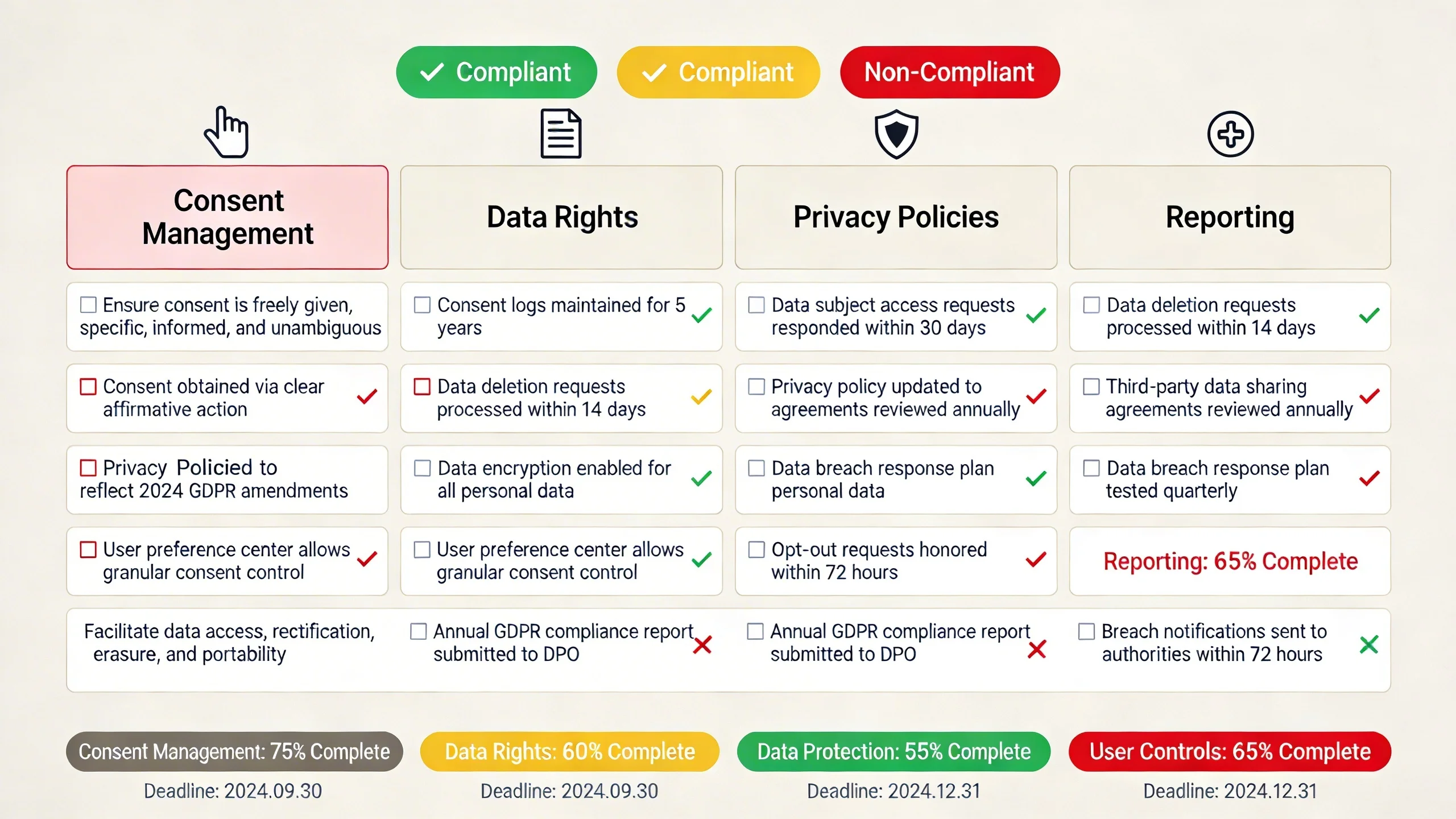
In a crowded digital space, trust is your most valuable currency. Viewing GDPR compliance not as a burden but as a competitive advantage changes the game. A clear, transparent, and user-friendly privacy approach signals respect for your audience. This respect is the bedrock of the loyalty needed to grow subscriptions, newsletter sign-ups, and direct reader engagement.
Decoding GDPR: Key Terms Every Publisher Must Know
To tackle compliance, you need to speak the language. Here are the core GDPR concepts translated specifically for a publisher's world.
- Personal Data: This is any information that can be used to identify a living person. For a publisher, this includes much more than just names and emails. Think about IP addresses, device IDs, advertising IDs, location data from a user's browser, and any behavioral data collected via analytics that can be tied to an individual user. If you have a newsletter, every email address is personal data.
- Data Controller vs. Data Processor: This distinction is crucial. As the publisher who decides why and how data is collected on your site, you are almost always the Data Controller. This makes you ultimately responsible for compliance. Your partners—ad tech vendors, analytics providers like Google, and email service providers like Mailchimp—are Data Processors. They process data on your behalf, but the legal responsibility rests with you.
- Lawful Bases for Processing: You can't just collect data; you need a legal reason. For publishers, two bases are most important:
Consent: This is the gold standard and the only* acceptable basis for serving personalized ads, using marketing cookies, and sending promotional newsletters. Valid consent must be freely given, specific, informed, and unambiguous. A user clicking "Accept" on a clear, detailed banner is a great example.
* Legitimate Interest: This can sometimes be used for essential operations, like fraud prevention, site security, or very basic, non-intrusive analytics (e.g., counting total page views). However, it's a risky path for anything related to advertising or tracking, as user privacy rights often override a publisher's commercial interests.
- Consent Management Platform (CMP): This is the essential technology that makes modern compliance possible. A CMP is the tool that displays the cookie banner on your site, records user choices (consent or rejection), and communicates those choices to the entire ad tech ecosystem. A good CMP should be certified under the IAB Europe's Transparency and Consent Framework (TCF v2.2), which is the industry standard for signaling consent.
Your Step-by-Step GDPR Compliance Checklist for 2025
Here is your actionable roadmap to GDPR compliance. Treat this as a living document for your organization, not a one-time task.
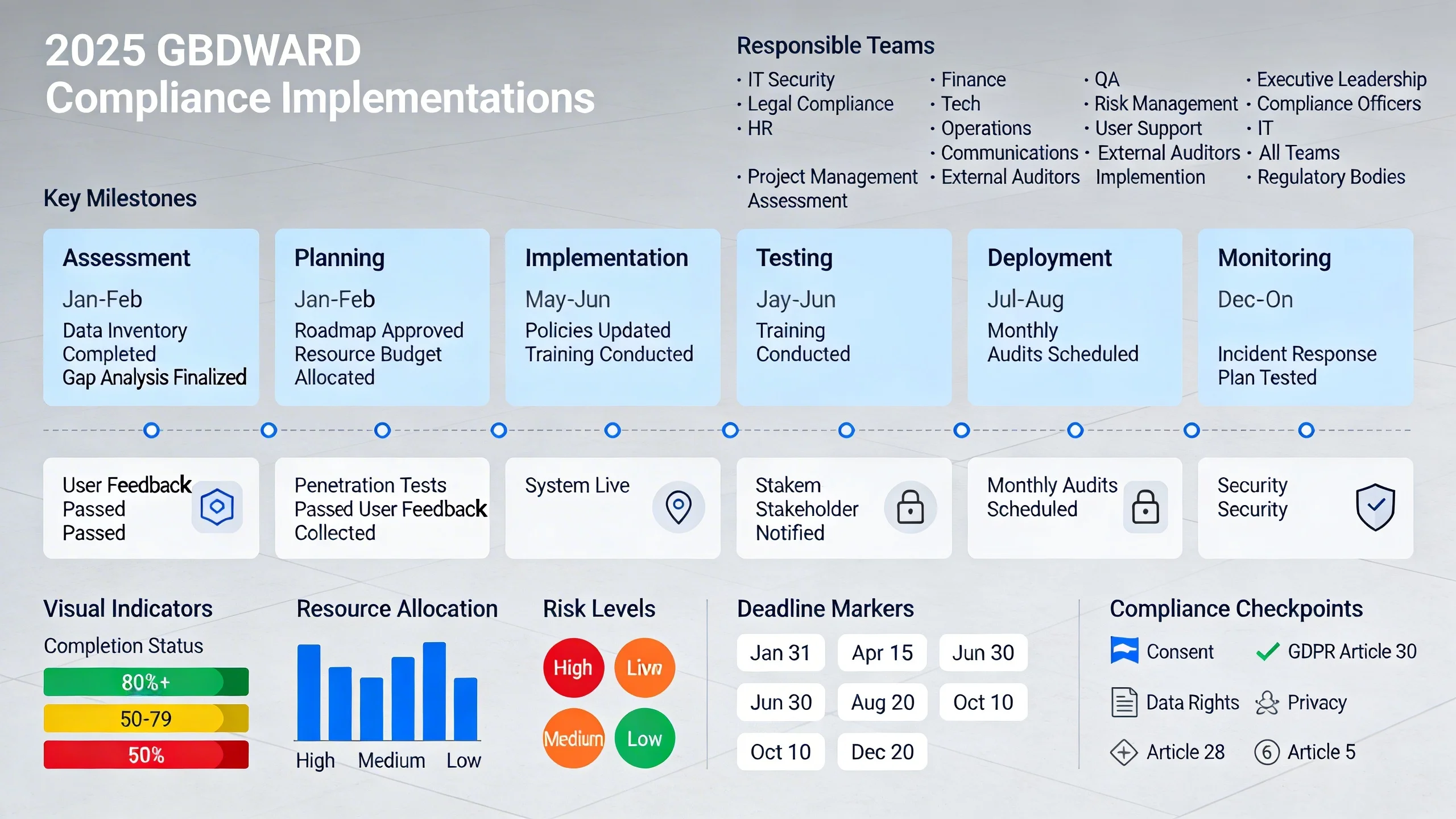
Step 1: Conduct a Comprehensive Data Audit
Before you can protect data, you must know what you have. This audit is your foundation. Sit down with your team and answer these questions honestly and thoroughly:
- What data are you collecting? Make a list. Include everything from analytics data (page views, session duration), ad interaction data (impressions, clicks), and user-submitted information (comments, contact forms, newsletter sign-ups).
- Where is it coming from? Pinpoint the sources. Is it just your website? Or also a mobile app, third-party widgets (like a social media feed), or embedded videos?
- Why are you collecting it? Map every single data point to a specific purpose. For example, "Email Address" maps to "Sending Weekly Newsletter," and "Advertising ID" maps to "Serving Personalized Ads." If you can't find a clear purpose, question why you're collecting it.
- Who are you sharing it with? List every third-party vendor that has access to your user data. This includes Google Analytics, your ad networks, social media plugins, email providers, and any other embedded services.
- How long do you keep it? Define your data retention policies. You should not store personal data indefinitely. For example, you might decide to anonymize analytics data after 24 months.
Step 2: Update Your Legal Documentation
Your data audit provides the information needed to create transparent and compliant legal documents.
- Revamp Your Privacy Policy: Your privacy policy must be written for humans, not just lawyers. It needs to be clear, concise, and easy to find on your website. It must include the "what, why, and who" from your data audit, explaining what data you collect, your lawful basis for doing so, who you share it with, and how long you keep it.
- Check Your Cookie Policy: This can be a section within your privacy policy or a separate page. It must detail every cookie and tracker used on your site, explaining its purpose (e.g., essential, performance, advertising) and duration.
- Sign Data Processing Agreements (DPAs): A DPA is a legally binding contract you must have with every one of your Data Processors (Google, your ad exchange, your email provider, etc.). This agreement ensures they handle your users' data according to GDPR standards. Most major providers have a standard DPA you can sign in your account dashboard.
Step 3: Implement and Configure a Compliant CMP
A Consent Management Platform (CMP) is non-negotiable for any publisher using advertising or non-essential cookies.
- Choose a reputable CMP: Look for a CMP that is IAB TCF v2.2 certified. Key features include a customizable user interface, detailed reporting, and the ability to integrate with your ad tech stack.
- Configure the Consent Banner: This is where most publishers get it wrong. Your banner must:
* Provide clear "Accept All" and "Reject All" (or an equivalent like "Manage Settings") buttons with equal prominence. The reject option cannot be hidden.
* Avoid pre-ticked boxes for any non-essential purposes. Consent must be an active choice.
* Clearly and simply state the purposes of the data collection (e.g., "Store and/or access information on a device," "Create a personalised advertising profile").
* Ensure the banner does not block the user's ability to access the privacy policy link.
- Provide Granular Controls: Within the CMP's second layer (the "Manage Settings" view), users must have the ability to consent to or reject specific purposes and even individual vendors.
- Make it Easy to Withdraw Consent: A user must be able to change their mind at any time. Place a persistent link or button, often labeled "Privacy Settings" or "Manage Consent," in your website's footer.
Step 4: Establish Processes for User Data Rights
GDPR grants individuals several rights over their data. You must have a process to honor them.
- Data Subject Access Requests (DSARs): Create a clear and simple process for users to request a copy of their personal data, correct it, or ask for it to be deleted.
- Designate a Point of Contact: Provide a dedicated email address (e.g.,
[email protected]) in your privacy policy for all data-related inquiries. Make sure someone on your team is responsible for monitoring and responding to these requests within the legally required 30 days. - Right to Erasure ('Right to be Forgotten'): Understand how to delete a specific user's data from your systems (e.g., your subscriber list) and know the process for passing that deletion request on to your processors.
Step 5: Secure Your Data and Train Your Team
Compliance isn't just about legal documents; it's about operational security.
- Data Security: Implement fundamental security measures. Use HTTPS across your entire site, enforce strong password policies for your CMS, and limit who on your team has access to sensitive user data.
- Staff Training: Everyone who handles user data—from editors and marketers to developers—must understand the basics of GDPR and your internal privacy policies. A single employee mistake can lead to a data breach.
- Data Breach Plan: Have a simple, written plan for what to do in the event of a data breach. This should include steps for identifying the breach, containing it, assessing the risk, and notifying the relevant DPA and affected individuals if necessary.
Sidestepping the Traps: Common GDPR Mistakes to Avoid
Many well-intentioned publishers fall into common traps. Here’s how to avoid them:
- "Cookie Walls": This refers to blocking all access to your content until a user clicks "Accept." This is considered non-compliant in many EU countries because the consent is not "freely given." The user is being forced to accept tracking to access the content.
- Misleading Banner Design ("Dark Patterns"): This includes using a brightly colored, prominent "Accept" button while hiding the "Reject" option in faint text or making the user go through multiple clicks to opt out. Regulators are specifically targeting these deceptive designs.
- Over-relying on "Legitimate Interest" for Advertising: This is a critical error. The consensus among EU regulators is clear: you must have explicit consent for tracking, profiling, and serving personalized advertising. Legitimate interest is not a valid legal basis for these activities.
- Forgetting Non-Cookie Tracking: GDPR is technology-neutral. It applies to all personal data, not just data collected via cookies. If you're collecting email addresses for a newsletter or using other identifiers to track users, all the same rules about consent and transparency apply.
What's Next? Preparing for the Future of Digital Privacy
GDPR compliance is not a finish line; it's a starting point. The world of digital privacy is constantly evolving, and staying ahead is key.
- The ePrivacy Regulation: While it has been in development for years, the ePrivacy Regulation is still on the horizon. When it arrives, it will add more specific and stringent rules for all electronic communications, cookies, and direct marketing, working alongside GDPR.
- Global Privacy Convergence: The world is following Europe's lead. With comprehensive privacy laws now active in California (CCPA/CPRA), Brazil (LGPD), and many other regions, having a strong GDPR foundation makes it significantly easier to comply with new regulations as they emerge.
- The First-Party Data Strategy: This brings us full circle. Mastering GDPR consent is the essential first step to building a robust, privacy-first data strategy. When users willingly and transparently give you their data, that data is more accurate, more valuable, and can be used to create better content, products, and user experiences that will fuel your business for years to come.
---
Disclaimer: This article is for informational purposes only and does not constitute legal advice. You should consult with a qualified legal professional for advice on your specific situation.
---
Conclusion
Navigating GDPR can feel daunting, but it is a manageable and essential process. Think of it not as a regulatory burden but as a blueprint for building a more sustainable and trustworthy digital publishing business. Compliance is a continuous journey, not a one-time fix.
By following this checklist, you can move beyond fear and uncertainty. You can protect your publication from fines, but more importantly, you can build deeper, more meaningful relationships with your audience. In 2025 and beyond, that trust is your most valuable asset.
Start with Step 1 today. Your future-proof publishing business depends on it.
Frequently Asked Questions
Do small blogs need to be GDPR compliant?
Yes. GDPR applies to any organization, regardless of size, that processes the personal data of individuals in the EU. If you have visitors from the EU and use tools like cookies, analytics, or advertising, you need to be compliant.
Can I use Google Analytics and still be GDPR compliant?
Yes, but you must configure it correctly. You need to obtain user consent before any Google Analytics cookies are fired, sign Google's Data Processing Agreement, and consider enabling IP anonymization. Simply having Google Analytics active without a proper consent banner is not compliant.
What is the IAB TCF v2.2 and do I need it?
The IAB Europe's Transparency and Consent Framework (TCF) is the industry-standard protocol that allows Consent Management Platforms (CMPs) to signal a user's consent choices to the advertising vendors on your site. If you monetize with programmatic advertising, using a TCF v2.2-certified CMP is essential for your ad partners to know whether they have permission to serve personalized ads.
What's the difference between GDPR and CCPA/CPRA?
GDPR is the EU's privacy law, while the CCPA/CPRA applies to residents of California. While they share similar principles like data access rights, they have key differences. GDPR is generally stricter, requiring an "opt-in" for data collection (you need consent first), whereas CCPA/CPRA has historically been more "opt-out" focused (you can collect data until the user says no). However, the trend is toward more GDPR-like principles globally.