
First, Understand Why Clawbacks Happen: The 4 Main Culprits
Before you can plug the leaks, you need to know where they’re coming from. Clawbacks aren’t random; they are direct responses to specific issues within the ad delivery chain. Here are the four primary culprits.
1. Invalid Traffic (IVT): The Primary Offender
Invalid Traffic (IVT) is the number one cause of ad revenue clawbacks, hands down. It refers to any ad clicks or impressions that do not come from a real human with genuine interest. IVT is broken down into two main categories:
- GIVT (General Invalid Traffic): This is the "good-guy" bot traffic that is necessary for the internet to function. It includes known spiders from search engines like Googlebot, analytics crawlers, and traffic from known data center IP addresses. GIVT is generally easy to identify and is filtered out by most platforms.
- SIVT (Sophisticated Invalid Traffic): This is the malicious, fraudulent activity designed to mimic human behavior and steal ad dollars. It includes hijacked devices, ad stacking (hiding ads behind other ads), pixel stuffing (loading ads in a 1x1 pixel), cookie stuffing, and ad injection. SIVT is much harder to detect and is the primary driver of significant revenue clawbacks.
2. Ad Quality and Policy Violations
Sometimes, the problem originates from a publisher's own ad setup. Policies from major platforms like Google are strict, and violations can trigger clawbacks. Common examples include:
- Poor Ad Placement: Placing ads too close to navigation buttons or interactive content, encouraging accidental clicks.
- Aggressive Ad Refresh: Refreshing ad units on a rapid timer rather than in response to a user action.
- Ad Stacking: Layering multiple ads on top of each other in a single ad slot, where only the top ad is visible.
3. Viewability and Engagement Issues
An ad impression is only valuable if it’s actually seen by a human. The Media Rating Council (MRC) defines a display ad as "viewable" if at least 50% of its pixels are in view for at least one continuous second. If your site serves a high volume of ads that never meet this threshold (e.g., ads at the bottom of the page that users never scroll to), advertisers won't pay for them. This discrepancy is often reconciled at the end of the month, resulting in a clawback.
4. Brand Safety and Advertiser Objections
Advertisers are fiercely protective of their brands. If their ad appears next to content they deem inappropriate or out of line with their brand guidelines (e.g., hate speech, violence, tragedy), they can pull their campaigns and demand their money back. Maintaining a brand-safe environment is crucial for securing and retaining high-value ad spend.
The Proactive Publisher's Checklist: 4 Pillars of Clawback Prevention
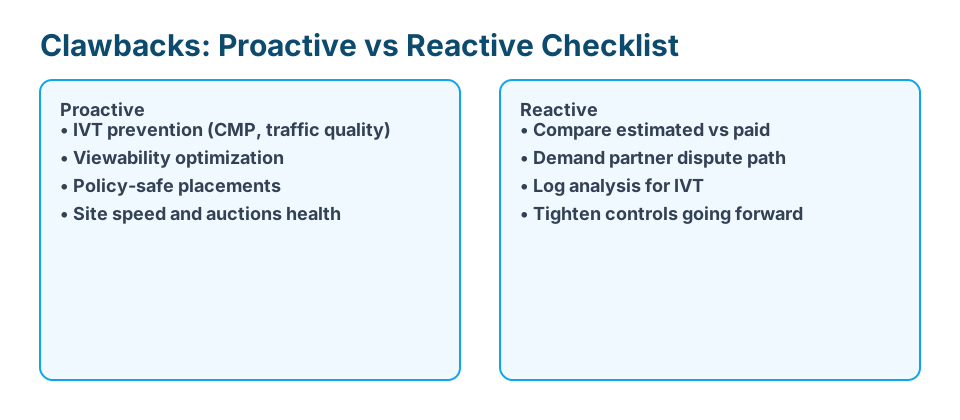
Now for the core of our strategy: moving from defense to offense. This checklist is built on four pillars that create a robust, resilient ad ecosystem.
Pillar 1: Fortify Your Defenses Against Invalid Traffic
- ✅ Implement ads.txt and sellers.json: These IAB Tech Lab initiatives are your first line of defense.
ads.txt(Authorized Digital Sellers) allows you to publicly declare who is authorized to sell your inventory, preventing domain spoofing.sellers.jsonallows buyers to verify the identity of the entities selling ad space. Implementing both builds crucial transparency and trust. - ✅ Partner with MRC-Accredited Vendors: Not all partners are created equal. Prioritize working with demand partners, ad exchanges, and verification services that are accredited by the Media Rating Council. This accreditation signifies a commitment to high standards and effective filtration of GIVT and SIVT.
- ✅ Deploy a Pre-Bid IVT Detection Solution: Most clawbacks happen because IVT is caught after the impression has already been served and paid for. A pre-bid solution analyzes an ad request before it goes to auction, blocking suspected IVT before it can ever enter your ecosystem. This is the single most effective way to stop clawbacks before they start.
- ✅ Analyze Your Traffic Sources: Don't just focus on volume; audit the quality of your traffic acquisition channels. If you’re paying for traffic from a source that has an unusually high bounce rate or low time-on-page, it could be a significant source of IVT. Be ruthless about cutting off low-quality sources.
- ✅ Block Known Data Center IP Ranges: A significant amount of bot traffic originates from known data centers. While many IVT prevention tools do this automatically, it's a technical best practice to ensure these IP ranges are blocked at the server or CDN level.
Struggling to identify the source of your clawbacks? Our free Ad Stack Audit can pinpoint vulnerabilities in minutes. Schedule a Free Audit
Pillar 2: Master Your Ad Placement and On-Page Experience
- ✅ Conduct a Full Ad Placement Audit: Systematically review your ad map on both desktop and mobile. Are ads causing content to jump around (high Cumulative Layout Shift)? Are they too close to navigation, causing "fat finger" clicks on mobile devices? A clean, user-friendly layout is a fraud-unfriendly layout.
- ✅ Prioritize Viewability Over Ad Count: More ads do not always equal more revenue. A cluttered page with low-viewability ads is less valuable than a clean page with a few highly viewable ad slots. Focus on placing ads where users will actually see them—above the fold or in "sticky" units that remain in view as the user scrolls.
- ✅ Implement Lazy Loading: Lazy loading prevents ads from loading until they are about to scroll into the user's viewport. This is a double win: it dramatically improves your viewability scores and speeds up initial page load times.
- ✅ Set a Smart Ad Refresh Strategy: If you use ad refresh, tie it to user triggers, not just a timer. For example, refresh an ad unit only when a user returns to an inactive tab or engages with on-page content. Aggressive, time-based refreshing is a major red flag for advertisers and ad platforms.
- ✅ Optimize for Core Web Vitals: Google’s Core Web Vitals (CWV) are a measure of user experience. A fast, stable site with a low Cumulative Layout Shift (CLS) prevents accidental clicks and creates the premium environment that attracts high-quality advertisers.
Pillar 3: Enhance Content Quality and User Engagement
- ✅ Focus on High-Quality, Original Content: Your best defense against bots is a legion of engaged, human users. Bots don't share articles, leave thoughtful comments, or subscribe to newsletters. Invest in content that builds a real community.
- ✅ Improve Site Navigation and Structure: A user who can easily find what they’re looking for will stay longer and view more pages. High engagement metrics like time on page, pages per session, and a low bounce rate are powerful positive signals to the entire ad ecosystem.
- ✅ Build a Loyal, Direct Audience: An audience that comes to your site directly, through organic search, or from your email newsletter is infinitely more valuable and less risky than one acquired through cheap, low-quality paid channels that are often rife with IVT.
Pillar 4: Maintain Strict Partner and Policy Compliance
- ✅ Thoroughly Vet All Demand Partners: In the age of header bidding, it's tempting to add as many SSPs as possible. Resist the urge. Research every potential partner's reputation, IVT policies, payment terms, and commitment to supply chain transparency (e.g., support for sellers.json).
- ✅ Know Your Platform Policies (Especially Google's): Ignorance is not an excuse. Regularly review the Google Publisher Policies and guidelines from your other major partners. A simple, unintentional violation can lead to significant clawbacks or even account suspension.
- ✅ Implement Brand Safety Controls: Use category exclusions and keyword blocking within your ad server to prevent ads from inappropriate categories from running on your site. This protects your users and ensures your inventory is a safe and desirable place for premium advertisers.
The Reactive Checklist: What to Do When a Clawback Occurs
Even with the best preventative measures, a clawback might still happen. When it does, don't just write it off. Use it as a learning opportunity.
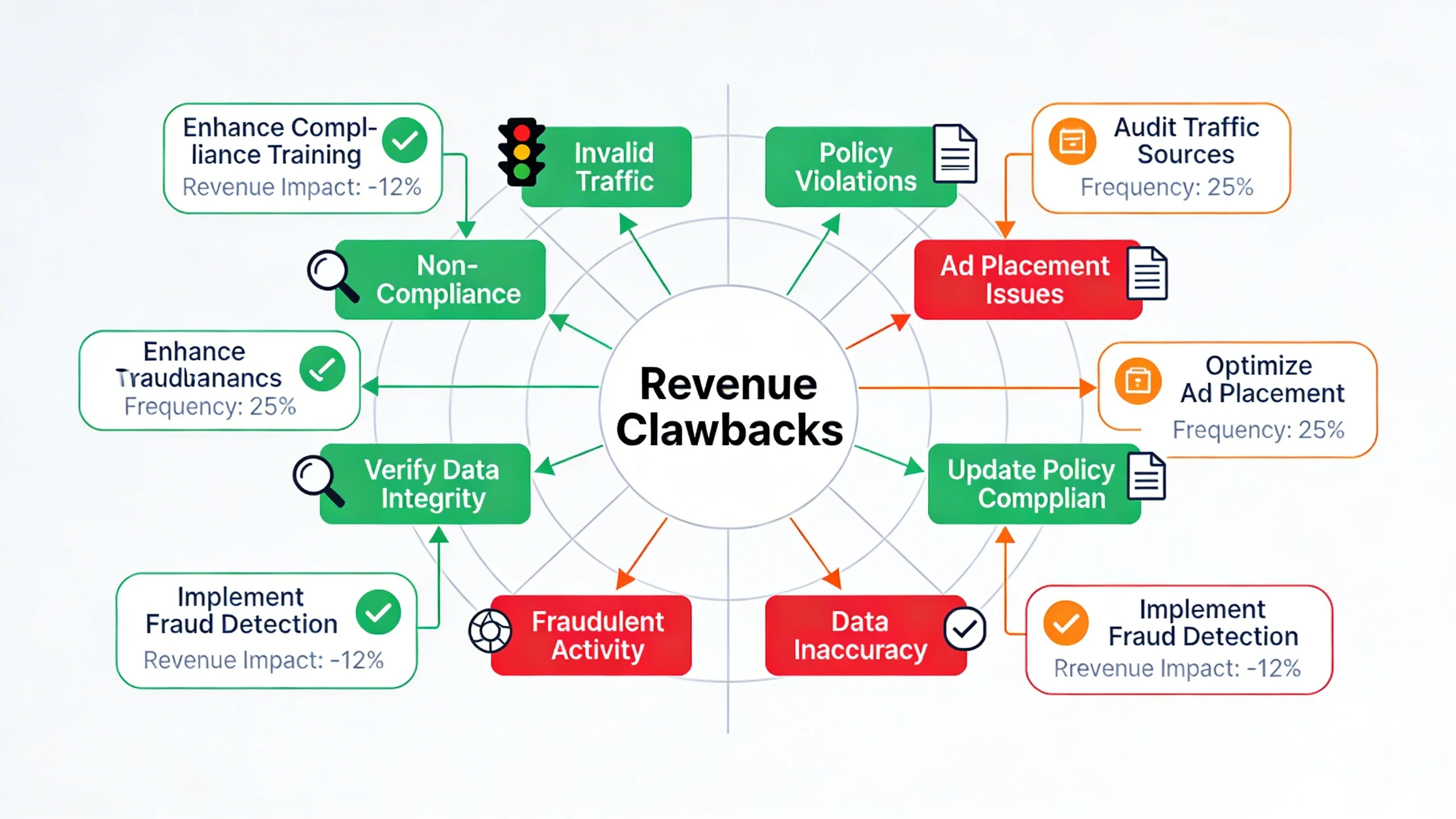
- Dig into the Reports: Don't just look at the final number. Analyze the discrepancy reports. Did the clawback come from a specific demand partner? A certain geography? A particular ad unit? Look for patterns.
- Correlate with Your Analytics: Cross-reference the discrepancy period with your own traffic analytics (e.g., Google Analytics). Did you see a sudden, unexplained traffic spike from a specific social media referral or a direct traffic source with a 100% bounce rate? That's your likely culprit.
- Communicate with Your Partners: Open a dialogue with your ad network or SSP account manager. Ask for a detailed discrepancy report and clarification on the reason for the clawback. Was it flagged as SIVT? Was it a viewability issue? The more data you have, the better.
- Learn and Iterate: Treat every clawback as a data point. If a specific traffic source was the cause, cut it off immediately. If a demand partner is consistently the source of major discrepancies, it may be time to replace them.
Conclusion: From Defense to Offense
Reducing ad revenue clawbacks requires a fundamental shift from a reactive mindset to a proactive, holistic strategy. It’s not about buying a single fraud detection tool; it’s about building a high-quality, transparent, and efficient ad ecosystem from the ground up.
By focusing on quality traffic, optimizing the user experience, demanding transparency from your partners, and implementing the steps in this checklist, you can do more than just plug leaks. You can build a more valuable, sustainable business, protect your hard-earned revenue, and foster the trust with advertisers that leads to long-term success.
Stop letting clawbacks eat into your profits. [Request a Demo of Your Product] and see how we can help you keep the revenue you earn.
Frequently Asked Questions (FAQ)
- What is a normal percentage for ad revenue clawbacks?
While there's no official industry number, anything consistently over 5-10% should be investigated immediately. The goal for a well-managed site is to get this number as close to 0-2% as possible.
- Can I dispute an ad revenue clawback?
It's difficult, but sometimes possible if you have compelling, transparent data from a trusted, MRC-accredited third-party verification partner. However, the time and resources required mean that prevention is always the best strategy.
- Is IVT the same as ad fraud?
Not exactly. Ad fraud is a malicious subset of Sophisticated Invalid Traffic (SIVT). Think of it this way: all ad fraud is IVT, but not all IVT (like search engine crawlers) is malicious fraud.
- How does header bidding affect clawbacks?
Header bidding can be a double-edged sword. It can increase your risk if you add numerous unvetted demand partners to your stack. However, it also provides more granular data and control, allowing you to more easily identify and remove problematic SSPs that are the source of discrepancies and clawbacks.