
The High Cost of Ignoring Geography: Why Your International Traffic Isn't Paying Off
The core issue is a fundamental mismatch: the relevance gap. Value, whether in ad revenue or product sales, is directly tied to relevance. An offer that doesn't resonate with a user's context—their location, currency, and culture—has a near-zero chance of converting.
Let's break down how this relevance gap is costing you money:
- Ad Revenue Disparity (The CPM Problem): Advertisers pay premium rates, or Cost Per Mille (CPM), for traffic from "Tier 1" countries like the US, UK, and Canada, where consumer spending is highest. When your ad setup is generic, it serves high-value ads to this group but defaults to low-paying, low-quality remnant ads for the rest of the world. This is why your revenue per visitor plummets for non-Tier 1 traffic.
- Affiliate Marketing Mismatches: This is the classic, costly mistake. You write a brilliant review and link to a product on Amazon.com. A reader from the UK clicks, ready to buy, but lands on the US store. They can't log in with their UK account, see prices in a foreign currency, and face exorbitant international shipping. The sale is lost. This friction breaks trust and kills your commissions.
- E-commerce Friction: Imagine a potential customer from France browsing your online store. They see all prices in USD. Instantly, they have to do mental math to convert the currency, assume shipping will be slow and expensive, and worry about customs fees. This cognitive load and perceived risk are primary drivers of international cart abandonment.
- Regulatory & Language Barriers: The digital world has borders. Showing a generic privacy policy to a European visitor might not be compliant with GDPR. More obviously, presenting an English-only offer or lead magnet to a native Spanish speaker is a missed opportunity at best and an alienating experience at worst.
What is Geo-Targeting? Your Foundation for Global Monetization
Before we fix the problems, let's define our primary tool.
Geo-targeting (or geolocation) is the practice of delivering different content, ads, or offers to a user based on their geographical location. This is typically determined in milliseconds by looking up their IP address in a database that maps IPs to their corresponding country, region, or city.
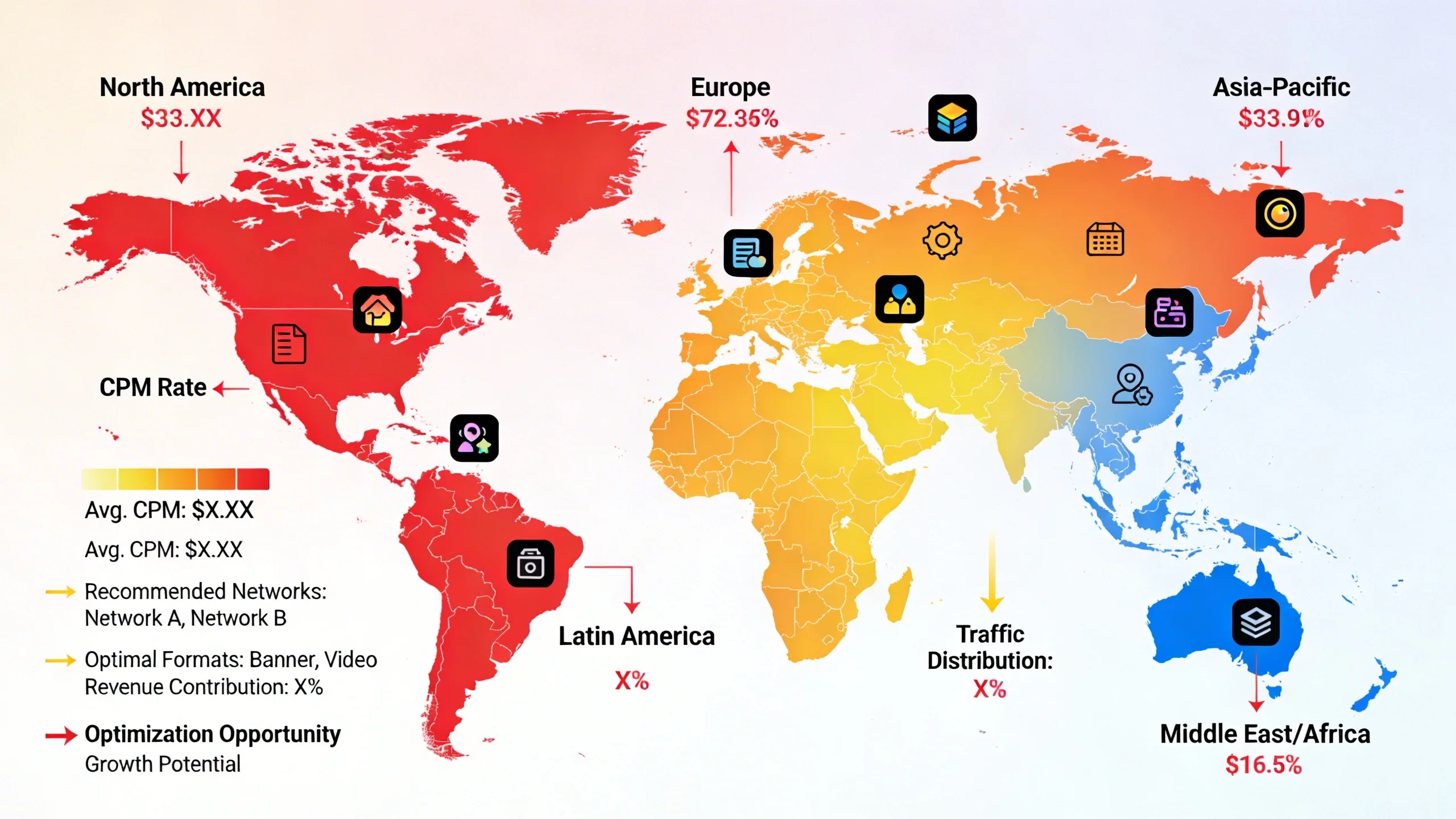
This detection can happen at different levels:
- Server-Level: Your website's server identifies the user's location and serves a pre-customized version of the page. This is the fastest and most reliable method.
- CDN-Level: A Content Delivery Network (CDN) like Cloudflare or Fastly can detect location at the "edge" (a server close to the user) and apply specific rules.
- Plugin/Script-Level: A JavaScript code or a WordPress plugin on your website detects the location in the user's browser and dynamically changes elements on the page.
Crucially, geo-targeting is a holistic strategy. It’s not just about swapping out an ad banner. It’s about re-engineering the entire user experience—from the currency they see and the language they read to the affiliate products you recommend.
Step 1 - Audit Your Audience: Know Where Your Gold is Buried
You can't create a targeted strategy without data. Your first step is to dive into your analytics and identify precisely where your opportunities lie. You need to find the countries with a high volume of traffic but a low return on investment.
Here’s how to do it in Google Analytics:
- Navigate to Audience > Geo > Location.
- You will see a world map and a table listing your traffic by country. Extend the date range to at least 90 days for a reliable sample size.
- Analyze the data, looking for these key patterns:
* Top 10-15 Countries by Traffic: Who are your biggest international audiences?
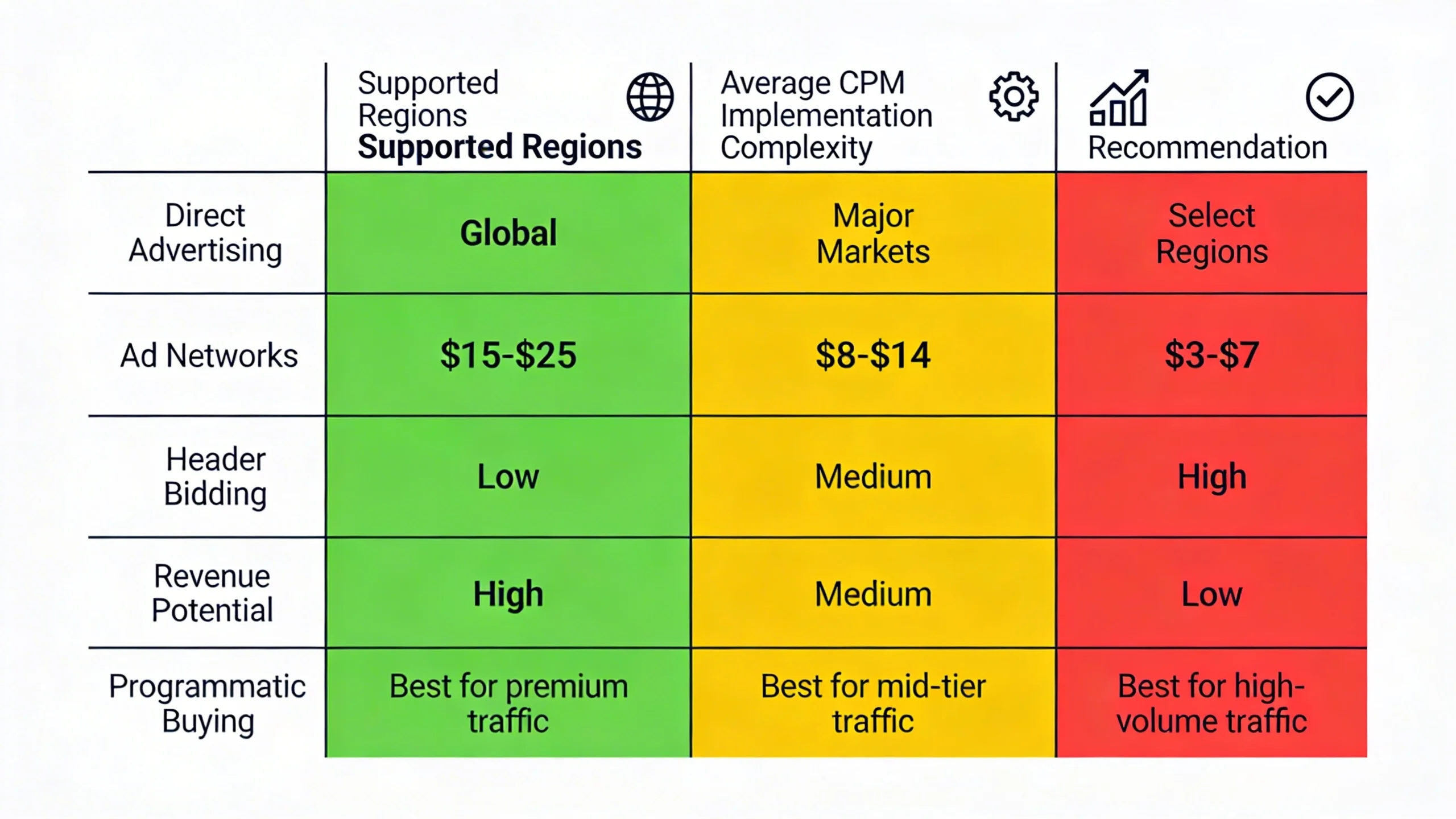
* Key Metrics Per Country: Compare Bounce Rate, Pages/Session, and Average Session Duration. High engagement is a good sign.
The Crucial Metric (Revenue/Conversions): If you have e-commerce tracking or goals set up, add metrics like Revenue, Transactions, and Conversion Rate* to your table. If you don't, this is your sign to set them up immediately.
You are looking for "opportunity countries"—places with significant traffic and engagement but disproportionately low revenue.
Here’s what that might look like:
| Country | Sessions | Revenue | Revenue per Session | Opportunity |
|---|---|---|---|---|
| United States | 100,000 | $10,000 | $0.10 | Baseline |
| United Kingdom | 35,000 | $1,200 | $0.03 | High |
| India | 30,000 | $150 | $0.005 | High |
| Germany | 25,000 | $400 | $0.016 | High |
| Canada | 20,000 | $1,800 | $0.09 | Medium |
In this example, the UK, India, and Germany are prime targets for a geo-targeting strategy. They have the audience, but the monetization is broken. This is your action list.
The Geo-Targeting Monetization Playbook: 4 Core Strategies
With your data-backed target list in hand, it's time to implement. Here are four powerful, actionable strategies to turn your international visitors into a revenue stream.
Strategy 1: Geo-Targeted Display Advertising
The Problem: Your ad network is serving low-value "Rest of World" ads to your international visitors, crushing your CPMs for 80% of your audience.
The Solution: Use a modern ad management platform that leverages header bidding and AI to automatically test and serve the highest-paying ads for each specific geographic region.
How to Implement:
- Upgrade Your Ad Network: This is the single most impactful change you can make. Platforms like Ezoic, Mediavine, and AdThrive are built for this. Their entire business model is based on running real-time auctions among dozens of ad partners for every single page view, ensuring a visitor from Germany is shown ads from German advertisers willing to pay top dollar, rather than a low-value remnant ad. This can instantly lift international ad revenue by 100-500%.
- Manual AdSense Targeting: If you're still on Google AdSense, you have less control, but you can make improvements. You can create different ad units and use a third-party geo-targeting plugin to show specific units to users from certain countries. For example, you could show a larger, more prominent ad unit to your US traffic and a smaller one to traffic from a country with historically lower CPMs. This is manual and less effective but better than nothing.
- Pro-Tip: Investigate video advertising. In some international markets where display ad CPMs are low, video ad CPMs (especially for pre-roll ads) can be surprisingly high. Platforms like Ezoic can help you test this automatically.
Strategy 2: Localized Affiliate Marketing
The Problem: You're sending all your traffic to a single affiliate storefront (e.g., Amazon.com), creating a dead end for international customers and costing you commissions.
The Solution: Use an intelligent link localizer that automatically detects a user's country and redirects them to their local, in-country version of the merchant's website.
How to Implement:
- The Amazon OneLink Solution: For those focused exclusively on Amazon, this is the free, native tool. Once set up, it automatically redirects international visitors to their local Amazon storefront (e.g., .co.uk, .de, .ca). It's the baseline standard.
- Advanced Link Management Tools: To truly level up, use a dedicated service.
* Geniuslink (genius.link): This is the industry standard. It goes far beyond Amazon, supporting thousands of retailers like Target, Best Buy, and Apple. You create one geni.us link, and it automatically sends users to the correct local store. It provides superior analytics and "choice pages" that let users pick their preferred retailer.
* WordPress Plugins: If you run on WordPress, plugins like Lasso or ThirstyAffiliates (with their geo-targeting add-ons) provide similar functionality directly within your dashboard, making it easy to manage links across your entire site.
- Find Country-Specific Programs: Don't assume Amazon is the best option everywhere. Use affiliate networks like Awin, CJ Affiliate, or Rakuten and filter their merchant directories by your target countries. You might discover a popular local retailer in Germany or Australia that converts far better for that audience than a global giant.
Strategy 3: Dynamic E-commerce & Digital Product Sales
The Problem: Your store is built for a single market. It shows one currency, one language, and one set of shipping rules, alienating 95% of the world.
The Solution: Dynamically change your store's pricing, currency, language, and even product availability based on the user's location to create a seamless, localized shopping experience.
How to Implement:
- Currency Switchers: This is table stakes. For Shopify, apps like "Geolocation" or "BEST Currency Converter" are essential. For WooCommerce, there are numerous currency switcher plugins that automatically detect a user's location via IP and display prices in their local currency. This single change can dramatically reduce cart abandonment.
- Multi-language Content: If you have a significant audience from a non-English speaking country, providing a translated version of your site is a game-changer. Use plugins like WPML or services like Weglot to create and manage translated content. Crucially, ensure you implement
hreflangtags correctly. These tags tell Google you have alternate language versions of a page, which is fantastic for international SEO and user experience. - Dynamic Product Display: For advanced optimization, use tools like GeoTargeting WP for WordPress. These allow you to show or hide specific content based on location. Imagine the power: a banner saying "Free Shipping in the UK!" that only UK visitors see, or hiding a product that you can't ship to Australia from Australian visitors.
Strategy 4: Geo-Targeted Lead Generation & Content Gating
The Problem: You're offering a single lead magnet—like an ebook or a webinar—that's only relevant to a fraction of your audience (e.g., "US Tax Tips for Freelancers").
The Solution: Create and display different lead magnets, pop-ups, and offers tailored to the user's region, language, and even time zone.
How to Implement:
- Leverage Your Email Tools: Most modern pop-up and lead generation tools like OptinMonster, ConvertBox, or Sleeknote have powerful display rules. One of the most common is geo-targeting.
- Actionable Examples:
* Compliance: Show a GDPR-compliant opt-in form with explicit consent checkboxes only to visitors from the EU.
* Language: Offer a Spanish-language version of your checklist to visitors from Spain and Mexico.
* Relevance: Promote a webinar on "Expanding into the European Market" specifically to your UK and EU audience.
* Time Zone: Schedule a pop-up promoting a live event to appear at a time-zone-friendly hour for your Australian visitors, not in the middle of their night.
The Tech Stack: Tools to Power Your Geo-Targeting Strategy
To make this happen, you need the right tools. Here is a scannable list of the key players mentioned throughout this guide:
- Advanced Ad Networks: Ezoic, Mediavine, AdThrive
- Affiliate Link Management: Geniuslink, Lasso, ThirstyAffiliates
- WordPress Dynamic Content: GeoTargeting WP, WPML (language), various currency switcher plugins
- Lead Generation: OptinMonster, ConvertBox
- CDNs: Cloudflare (often provides the underlying geo-IP data that powers other plugins)
A quick technical note: When choosing tools, you may see "server-side" vs. "client-side" targeting. Server-side (PHP-based) is generally faster and more reliable as the content is modified before the page is even sent to the user. Client-side (JavaScript-based) is often easier to implement but can be slightly slower and occasionally blocked by ad blockers. For mission-critical functions like e-commerce, prefer server-side solutions where possible.
Putting It All Together: Your 5-Step Action Plan
This guide contains a lot of information. Don't get overwhelmed. Turn it into action with this simple, five-step plan.
- Audit: Spend one hour in Google Analytics. Identify your top 5 "opportunity countries" with high traffic but low revenue.
- Pick One Strategy: Don't try to do everything at once. Find your biggest leak. Is it affiliate links? Ad revenue? E-commerce conversions? Start there.
- Choose Your Tool: Select and install one tool to solve that primary problem. If it's Amazon links, set up Geniuslink. If it's ad revenue, apply to Ezoic.
- Implement & Test: Roll out the change for your top opportunity country. Create an annotation in Google Analytics on the day you launch so you can track performance.
- Measure & Repeat: Wait 30 days. Go back to your analytics and compare the revenue and conversion data for that country before and after your change. If it worked, roll it out to your other opportunity countries or move on to fixing the next leak in your bucket.
Conclusion
Stop treating your global audience as a monolith. The path to effective international monetization is paved with personalization at scale. Your visitors from different corners of the world have different expectations, use different currencies, and respond to different offers. Ignoring this is a guaranteed way to leave money on the table.
By implementing a thoughtful geo-targeting strategy, you’re not just fixing a leaky bucket; you’re building a sophisticated, global-ready business. You're creating a system that respects and serves every single visitor, delivering a better experience that turns clicks into customers and pageviews into profit, no matter where they are in the world.
---
Frequently Asked Questions (FAQ)
Q1: Will geo-targeting slow down my website?
A: If implemented correctly using a quality tool, the impact is negligible. Fast server-side solutions or tools that leverage a CDN are highly efficient. Poorly coded, low-quality plugins can cause slowdowns, so always choose reputable and well-supported tools.
Q2: Is geo-targeting bad for SEO?
A: On the contrary, it's good for SEO when done right! Showing more relevant content to users improves engagement signals like lower bounce rates and higher time on page, which Google views favorably. If you are creating fully translated versions of your pages, just be sure to use hreflang tags correctly to inform search engines of the relationship between them.
Q3: How accurate is IP-based geo-targeting?
A: It's extremely accurate at the country level, with most services boasting over 99% accuracy. It becomes less precise at the city or postal code level. For the monetization strategies discussed here, country-level targeting is almost always all you need.