

The Core Principle: Selling the Right Impression to the Right Buyer for the Highest Price
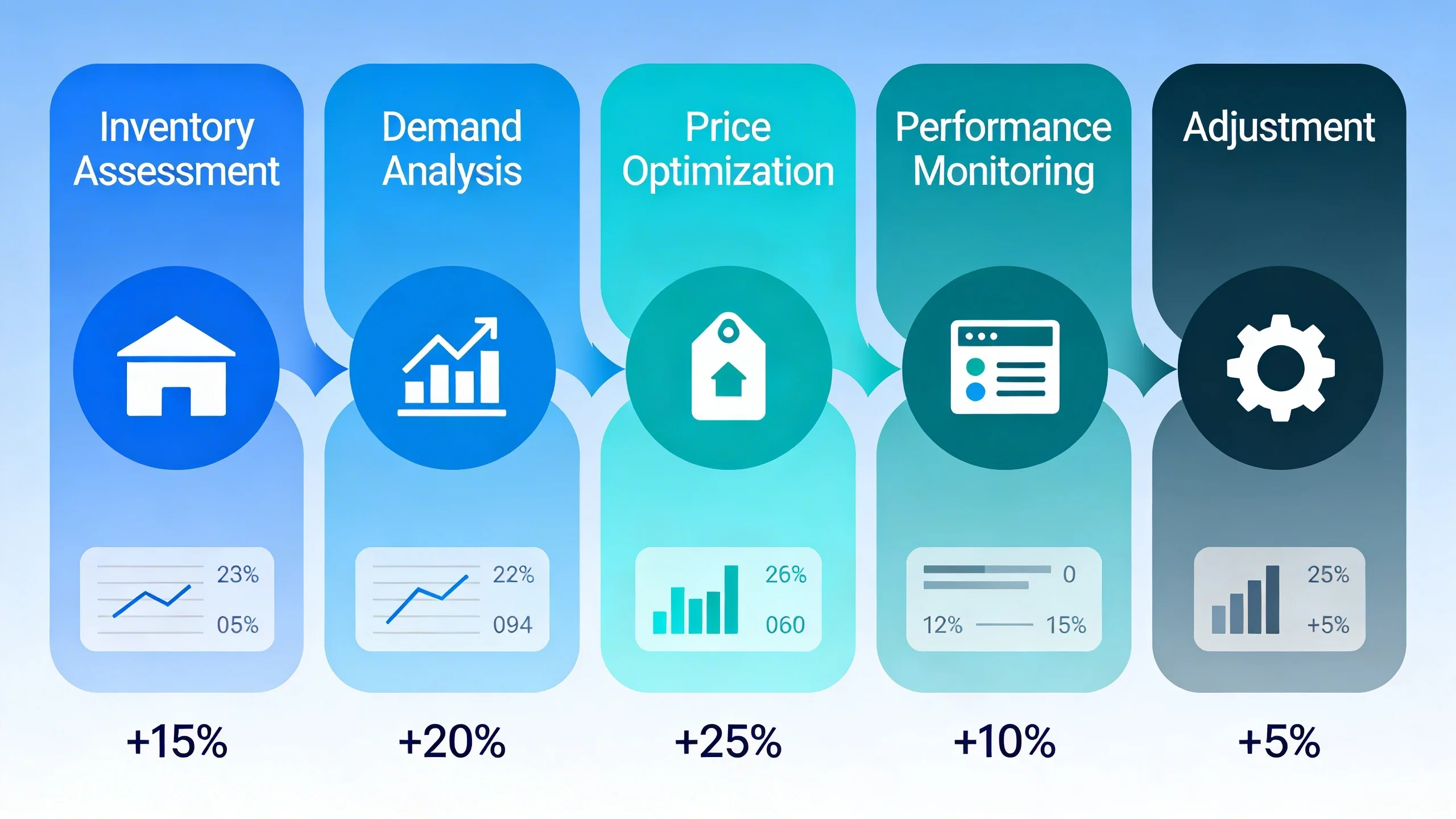
At its heart, ad yield management is the shift from a "set it and forget it" monetization approach (like running basic Google AdSense and hoping for the best) to a dynamic, data-driven strategy. It’s the difference between being a passive landlord and an active portfolio manager for your website's most valuable real estate: its ad inventory.
This process is proactive, not reactive. Instead of just looking at last month's revenue report, you're actively influencing this month's outcome by fine-tuning the mechanics of how your ad space is sold.
The ad yield equation has two fundamental sides you must balance:
- Price (Maximizing CPM): This is the rate advertisers are willing to pay for your ad impressions. A higher CPM (Cost Per Mille, or cost per thousand impressions) means your inventory is perceived as more valuable. The goal is to create a competitive environment where multiple advertisers bid against each other, driving this price up.
- Volume (Maximizing Fill Rate): This is the percentage of ad requests that are successfully filled with a paid ad. An ad slot that goes unfilled is a wasted opportunity, generating zero revenue. The goal is to ensure that as many ad opportunities as possible are monetized.
The ultimate objective is to find the perfect equilibrium between price and volume. Selling one ad impression for a $10 CPM is great, but selling 1,000 impressions at a $2 eCPM is better. The metric that truly matters is your eCPM (Effective Cost Per Mille), which reflects your total revenue. Effective ad yield management is the continuous process of optimizing all the underlying factors to maximize that final number.
Why Ad Yield Management is No Longer Optional for Publishers
In today's crowded digital landscape, simply having traffic is not enough. Sophisticated advertisers and complex technologies have reshaped the marketplace. Proactively managing your ad yield is no longer a luxury for large media companies; it's a necessity for survival and growth for any serious publisher. Here’s why it's so critical.
Maximize Revenue from Your Existing Traffic
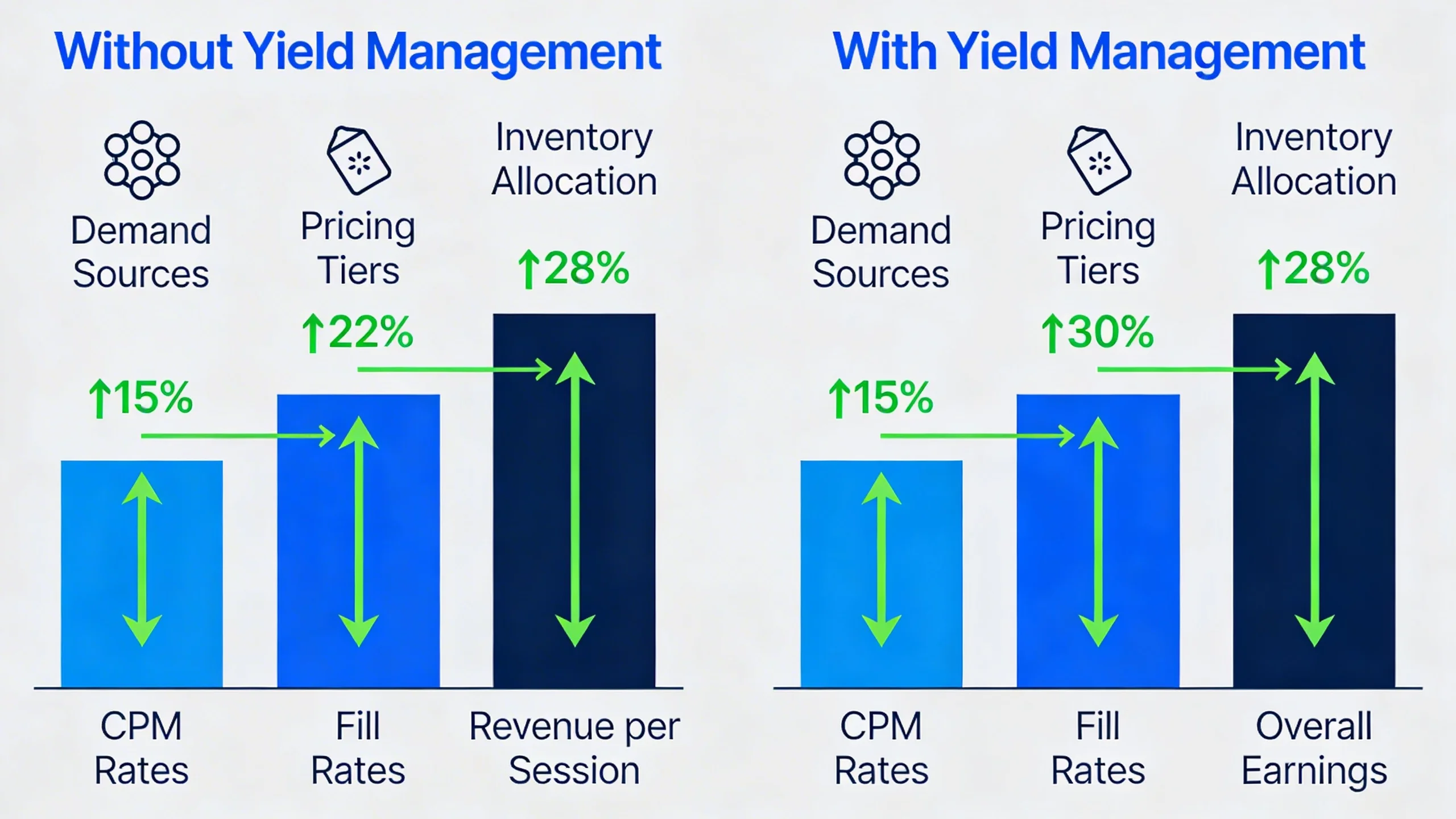
This is the most direct and compelling benefit. Instead of constantly chasing more pageviews, yield optimization allows you to earn significantly more from the audience you already have. By ensuring every impression is sold in a competitive auction for its true market value, publishers regularly see revenue lifts of 30%, 50%, or even more, without changing their content or traffic acquisition strategy.
Gain a Competitive Advantage
The reality is that your competitors—the other sites vying for the same audience and ad dollars—are likely already optimizing their ad yield. If they are using advanced techniques like header bidding to earn more per visitor, they can reinvest that extra revenue into creating better content, marketing, and audience growth, creating a cycle of success. Adopting a yield management strategy is essential to level the playing field and compete effectively.
Improve User Experience
It might seem counterintuitive, but a sophisticated ad strategy can lead to a better user experience. Modern yield management techniques, when implemented correctly, can reduce ad latency (load times). Furthermore, the increased competition often brings in higher-quality, premium advertisers, leading to more relevant and visually appealing ads. A faster site with better ads keeps users engaged and on-page longer, which in turn makes your ad inventory even more valuable.
Make Data-Driven Decisions
Ad yield management forces you to move from guesswork to a strategy based on hard data. You'll gain deep insights into your revenue streams, understanding which ad units perform best, which geographical regions are most lucrative, and what user segments drive the most value. This data is a goldmine, allowing you to make informed decisions that impact not just your ad strategy but your content and audience development efforts as well.
The Building Blocks: Key Concepts and Metrics You Must Know
Before you can manage your yield, you need to speak the language. The world of programmatic advertising is filled with acronyms and jargon, but the core concepts are straightforward.
The Programmatic Ecosystem in 60 Seconds
Programmatic advertising is simply the automated buying and selling of digital ad space. Your ad yield management strategy operates within this ecosystem. Here are the key players:
- SSP (Supply-Side Platform): Think of an SSP as your sales agent. As a publisher (the "supply"), you use an SSP to connect your ad inventory to multiple potential buyers and manage who gets to bid on it.
- Ad Exchange: This is the massive digital marketplace, like the New York Stock Exchange for ads. It's where SSPs make inventory available and where real-time auctions for ad impressions happen in milliseconds.
- DSP (Demand-Side Platform): This is the advertiser's buying agent. Advertisers (the "demand") use DSPs to set up campaigns and bid on ad inventory across various ad exchanges to reach their target audiences.
The flow is simple: Your website has an ad slot available. Your SSP offers that slot to the Ad Exchange. DSPs representing advertisers bid on it. The highest bidder wins, and their ad is served on your site—all in the time it takes your page to load.
(Visualized Flow: Publisher → SSP → Ad Exchange → DSP → Advertiser)
Essential Yield Metrics
To measure success, you need to track the right metrics. These are the vital signs of your monetization health.
- Ad Impression: A single instance of an ad being displayed on your webpage. This is the fundamental unit of inventory you are selling.
- Fill Rate: The percentage of ad requests that successfully result in an ad impression being served.
Formula: (Impressions / Ad Requests) 100
Why it matters:* A low fill rate is the digital equivalent of an empty hotel room. It signifies lost revenue opportunities that you need to plug.
- CPM (Cost Per Mille): The price an advertiser agrees to pay for 1,000 ad impressions. This is a measure of demand-side value.
Why it matters:* A high CPM indicates that advertisers see your inventory as valuable and are willing to pay a premium to reach your audience.
- eCPM (Effective Cost Per Mille): Your actual earnings per 1,000 impressions. This is the ultimate publisher-side metric because it combines both price and volume (fill rate) into a single, comprehensive figure.
Formula: (Total Earnings / Total Impressions) 1000
Why it matters:* This is your north star. Your entire ad yield management strategy is geared towards maximizing your eCPM.
- Ad Latency: The time delay between a user visiting your page and the ad fully loading and appearing.
Why it matters:* High latency creates a poor user experience, can cause visitors to bounce, and lowers ad viewability—all of which decrease the value of your inventory and hurt your revenue.
The Evolution of Strategy: From Waterfall to Header Bidding
Understanding how ad selling technology has evolved is crucial to grasping why modern yield management is so much more effective. The single biggest shift has been the move from the inefficient "waterfall" method to the highly competitive "header bidding" auction.
The Old Way: Ad Tag Waterfalling
For years, the waterfall was the industry standard. It’s a sequential, priority-based system for selling ad impressions.
Imagine you're trying to sell a concert ticket. With a waterfall, you first offer it to your best friend for $50. If they decline, you then offer it to your second friend for $40. If they also decline, you offer it to a third for $30. The problem is, you never go back to your first friend. What if your third friend was secretly willing to pay $60? You'd never know, because you only offered it to them at a lower price after the others had passed.
This is exactly how the ad waterfall works. It calls ad networks one by one, in a fixed order of priority. Network A gets the first chance to buy. If they don't meet a set price, the impression "waterfalls" down to Network B, then C, and so on.
The Flaw: This system is fundamentally inefficient. It doesn't create true, simultaneous competition. It often fails to find the advertiser who was actually willing to pay the most for that impression, leaving significant money on the table.
The Modern Solution: Header Bidding (Prebid)
Header bidding completely changed the game. It is a unified auction that allows all your demand partners to bid on your ad inventory at the same time, before your ad server is even called.
Let's go back to the concert ticket analogy. With header bidding, you step into a real-time auction house. You announce, "I have one ticket for sale!" and all your friends (the ad networks) see it and shout out their best bids simultaneously. The highest bidder instantly wins the ticket.
This is the power of header bidding. It flattens the waterfall and creates a fair, transparent, and hyper-competitive auction for every single impression.
The Benefit: By fostering true competition, header bidding dramatically increases CPMs and, consequently, your overall revenue (eCPM). It gives publishers more control, greater transparency into what their inventory is worth, and ensures they are capturing the maximum value from the open market.
7 Actionable Ad Yield Management Strategies for Publishers
Theory is great, but results come from action. Here are seven proven strategies you can implement to start actively managing and improving your ad yield.
- Implement a Header Bidding Wrapper
This is the single most impactful step you can take. A header bidding "wrapper" is a piece of JavaScript code in your website's header that manages the unified auction. It calls all your demand partners, collects their bids, and sends the winning bid to your ad server. While you can build one yourself, most publishers use a pre-built solution like Prebid.js or work with a monetization partner who provides a managed wrapper.
- Diversify Your Demand Partners
Don't put all your eggs in one basket. Relying solely on Google AdSense is a common mistake. To create a truly competitive auction, you need to connect to multiple SSPs and ad exchanges through your header bidding setup. Adding even 3-5 quality demand partners alongside Google can create the bidding pressure needed to significantly lift your CPMs.
- Optimize Ad Formats and Placements
Not all ad slots are created equal. Continuously A/B test different ad sizes (e.g., 300x250 vs. 336x280), types (display, video, native), and locations. Use data to determine what works best. High-impact units like sticky sidebar ads or anchor ads that remain in view as the user scrolls often command higher CPMs and improve overall yield.
- Set Smart Price Floors
A price floor is the minimum CPM you're willing to accept for an impression. Setting a floor that is too high can hurt your fill rate, while one that is too low devalues your inventory. Use dynamic price floors that automatically adjust based on historical data, user geography, device type, and other factors to protect your inventory's value without sacrificing fill.
- Focus on Ad Viewability
An ad that is served but never actually seen by a human is worthless to an advertiser. Viewability is a critical metric that advertisers use to evaluate inventory quality. Improve it by using "lazy loading" (where ads only load when they are about to scroll into view) and placing ad units in locations where they have the highest chance of being seen, such as "above the fold" or in the main content column.
- Leverage Data and Analytics
Your ad server and analytics platforms are treasure troves of information. Dive into your reports regularly. Identify which pages on your site generate the most ad revenue, which countries your most valuable users come from, and which traffic sources drive the highest eCPMs. Use these insights to double down on what's working, informing both your content creation and ad optimization strategies.
- Consider Direct Deals
While programmatic auctions are powerful, don't forget about selling inventory directly to advertisers. For high-value, guaranteed ad placements, you can use Programmatic Direct deals or Private Marketplaces (PMPs). These allow you to offer premium inventory to select buyers at a pre-negotiated fixed price, providing a predictable and often lucrative revenue stream.
Choosing Your Tech Stack: The Publisher's Dilemma
After reading this, you might be thinking, "This sounds great, but how do I actually do it?" This is the final piece of the puzzle. Publishers generally have two paths for implementing a sophisticated ad yield management strategy.
The DIY Route: This path involves setting up and managing the entire ad stack yourself. It requires significant technical expertise to implement and maintain a Prebid.js wrapper, configure a complex ad server like Google Ad Manager, and establish direct relationships with multiple SSPs. This approach offers maximum control but is typically only feasible for large publishers with dedicated ad operations (AdOps) teams and engineering resources.
The Partner Route (Managed Service): For the vast majority of independent publishers, this is the most effective and efficient path. A monetization partner provides an all-in-one solution. They supply the pre-configured header bidding technology, bring their own established relationships with dozens of demand partners, and provide a team of experts to manage the day-to-day optimization of your ad stack. They handle all the complexity in exchange for a share of the revenue they generate, allowing you to focus on what you do best: creating great content.
Conclusion: Take Control of Your Revenue
Ad yield management is no longer a dark art reserved for the internet's giants. It is an essential, accessible discipline for any digital publisher serious about growth.
It represents a fundamental shift in mindset: from passively placing ads to proactively managing your ad inventory as the valuable, revenue-generating asset it is. We've seen how this strategy has evolved from the inefficient waterfall model to the hyper-competitive unified auctions powered by header bidding. By focusing on the key metrics that matter—like eCPM and viewability—and implementing proven strategies like demand diversification and ad unit optimization, you can take direct control over your financial success.
Stop leaving money on the table. Start managing your ad yield, and you will unlock your website's true revenue potential.
---
Ready to see what expert yield management can do for your revenue? Schedule a free consultation with our ad ops specialists today and get a personalized revenue forecast for your site.